
If you or a loved one have been injured in a collision involving a DoorDash driver or delivery vehicle in Scottsdale, an experienced legal team can help you navigate the complexities of rideshare and delivery-service insurance. Harris Injury Law serves clients throughout Scottsdale and Maricopa County, helping clients understand their options for seeking compensation under Arizona law for medical expenses, lost wages, and related losses.
Our Scottsdale personal injury attorneys have experience with car, truck, and delivery‑related accident matters and can guide clients through the legal process, from investigating the crash to determining liability and negotiating with the insurance company.
DoorDash delivery collisions are different from ordinary car accidents. Multiple insurance policies, app-based coverage rules, and corporate liability policies can make it hard to know who is responsible when an accident occurs.
Here are some reasons clients have chosen Harris Injury Law in the past:
We represent clients in Scottsdale in matters involving rideshare and delivery‑service accidents such as DoorDash or Uber Eats.
You’ll speak directly with your attorney, not a call-center operator, from day one.
We have experience handling claims involving traumatic brain injuries, spinal cord injuries, and other severe injuries resulting from delivery-vehicle crashes.
We can help you understand your options for seeking compensation for medical expenses, lost wages, and other accident-related losses.
Our legal team is skilled at identifying all insurance policies that may apply, including personal auto insurance and limited liability coverage from rideshare companies.
We negotiate with insurance adjusters to seek a settlement consistent with Arizona law.
If necessary, we can represent you through litigation.
If you’ve been injured in a DoorDash-related car accident in Scottsdale, a lawyer experienced in accident cases can help you understand your rights and the types of compensation allowed under Arizona law.
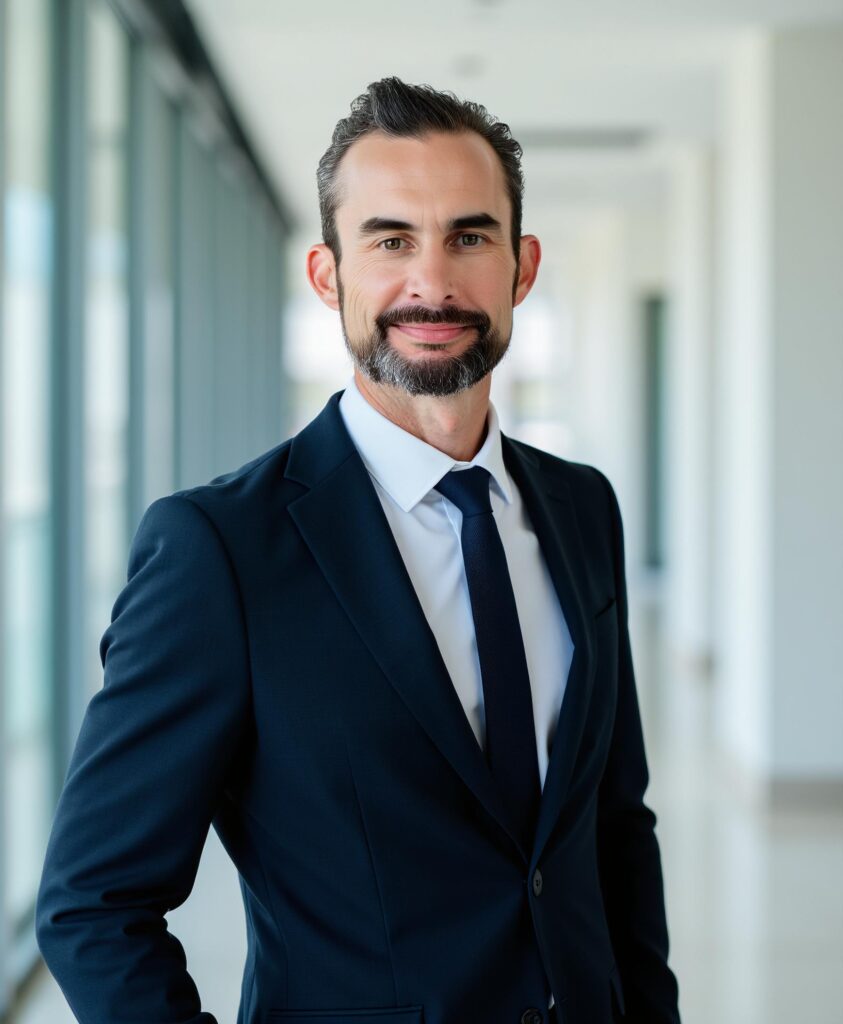
Jason A. Harris has experience handling both personal injury and workers’ compensation cases — a combination that can be valuable in complex accident claims. Since 2006, he has helped clients recover physically and financially after serious car accidents, truck accidents, and workplace injuries.
Jason’s background in both personal injury and workers’ compensation is useful in DoorDash and rideshare accident cases, where multiple layers of insurance, from the driver’s personal policy to the company’s commercial policy, often come into play.
Clients have noted Jason’s accessible, hands‑on approach. He works closely with clients throughout the process helping them navigate the challenges of medical recovery, insurance claims, and emotional trauma.
DoorDash and delivery-service drivers spend long hours navigating Scottsdale’s congested roads, often under time pressure. Common causes of these accidents include:
Distracted driving, such as texting or navigating the DoorDash app.
Speeding or rushing to complete deliveries.
Fatigue, caused by long shifts or multiple delivery runs.
Improper driver training or inadequate supervision by delivery companies.
Sudden stops or unsafe parking near busy restaurants or apartment complexes.
Multi-vehicle collisions on high-traffic roads like Scottsdale Road, Shea Boulevard, and Loop 101.
Aggressive driving in dense commercial zones such as Old Town Scottsdale or near the Scottsdale Waterfront.
Each of these situations can leave delivery drivers, passengers, or other motorists facing serious injuries, medical expenses, and property damage.
While DoorDash-specific crash counts are not published separately, local and state transportation data highlight the risks that delivery and rideshare drivers face in the Scottsdale area.
According to the City of Scottsdale 2022 Traffic Volume & Collision Report, the city recorded 3,905 total collisions in 2022 (roughly 16 collisions per 1,000 residents), with 30 traffic fatalities across 2021–2022, including incidents involving bicyclists and pedestrians. The same report notes a 15.2% decrease in segment collision rates and a 5.6% reduction in intersection collision rates from 2020 to 2022, showing overall improvement but still thousands of crashes annually.
Statewide, the Arizona Department of Transportation (ADOT) reported 121,107 motor-vehicle crashes in 2023, resulting in 1,178 fatalities and more than 52,000 injuries across Arizona.
Regionally, the Maricopa Association of Governments (MAG) tracks crash trends across Greater Phoenix, including Scottsdale, revealing that urban areas experience a higher concentration of multi-vehicle and intersection collisions, conditions that often overlap with delivery-driver and rideshare activity.
Together, these public-agency statistics show why DoorDash drivers and other delivery workers in Scottsdale face heightened crash exposure: congested arterials, multiple delivery stops, and continuous interaction with busy restaurant corridors and residential complexes.
When an accident occurs, multiple parties may share responsibility. You may be entitled to compensation if you were injured as a DoorDash driver, passenger, or third-party motorist.
Liable parties may include:
The DoorDash or rideshare driver (if negligent).
Another at-fault driver involved in the collision.
The delivery company, if poor policies or improper driver training contributed.
A vehicle owner or maintenance provider responsible for mechanical failure.
Our legal team investigates each case carefully, reviewing the official police report, digital app data, and insurance documents to prove liability and ensure no responsible party is overlooked.
DoorDash accidents often involve multiple insurance policies:
The driver’s personal insurance may cover accidents when the app is off.
Rideshare insurance policies (or limited liability coverage) may apply when the driver is actively logged in or completing a delivery.
Uninsured/underinsured motorist coverage can protect victims when another driver lacks adequate insurance.
We identify which insurance coverage applies to your specific situation and pursue compensation from all available sources.
Depending on your case, you may seek compensation for:
Medical treatment, hospital stays, and rehabilitation.
Lost wages and diminished earning capacity.
Property damage and vehicle repairs.
Non-economic damages for physical pain, emotional trauma, and ongoing medical care.
We help evaluate financial and non‑economic losses to seek a settlement that reflects the facts of your case.
Our law firm provides comprehensive legal support for Scottsdale accident victims. We:
Offer a free consultation to review your claim and answer your questions.
Gather medical records, witness statements, and delivery-app data.
Coordinate with accident-reconstruction experts to prove negligence.
Negotiate with insurance adjusters to seek compensation allowed by law.
File lawsuits when insurers deny or undervalue valid claims.
Keep clients updated through the entire process, from investigation to settlement or trial.
Our experience handling cases involving rideshare vehicles, delivery drivers, and truck accidents allows us to navigate overlapping policies and determine the best strategy to pursue compensation.
When a serious accident occurs, you need immediate help. Harris Injury Law strives to be available to clients outside normal business hours when possible.
You may contact our office to speak with an attorney or staff member, and we will respond as promptly as possible.
Receive guidance on what to do at the accident scene and how to document injuries sustained.
Get assistance scheduling medical attention and connecting with trusted doctors or rehabilitation centers.
Timely action matters, promptly securing evidence and initiating your personal injury claim can make a difference in the outcome of your case.
Our firm proudly serves clients across Scottsdale, from Old Town to McCormick-Stillman Railroad Park and up to the Loop 101 corridor. Many DoorDash and rideshare accidents occur near popular areas such as Scottsdale Waterfront, Scottsdale Quarter, and Fashion Square, where heavy traffic and frequent deliveries increase risk.
We also maintain professional relationships with local body shops, physical-therapy providers, and rehabilitation specialists who regularly assist our injured clients.
If you’ve been involved in a DoorDash, Uber Eats, or other rideshare-related accident in Scottsdale, don’t face the aftermath alone. You may be entitled to compensation for medical expenses, lost wages, and emotional distress caused by the crash.
Call or text Harris Injury Law at (480) 800-HURT today for a free consultation. Our attorneys will help you determine liability, evaluate your insurance coverage, and pursue fair compensation for your losses.
We assist clients in rideshare accident cases throughout Scottsdale and nearby areas. Let our experienced legal team guide you through the recovery process and pursue compensation you may be eligible for under Arizona law.
to assist you with your DoorDash accident case.
Call or text now for a free consultation.
⭐⭐⭐⭐⭐
“After my DoorDash delivery accident in Scottsdale, Jason Harris and his team handled everything, from the insurance paperwork to my medical claims. They helped me recover compensation for my injuries and vehicle damage. I highly recommend them.”
- A.S., Scottsdale
⭐⭐⭐⭐⭐
“I was a rideshare passenger injured in a crash downtown. Harris Injury Law guided me through the legal process and helped me get compensated for my medical bills and lost wages. They truly care.”
- M.T., Scottsdale
⭐⭐⭐⭐⭐
“Jason Harris explained how my personal auto insurance applied after a DoorDash accident and helped me file my claim properly. The firm really understands these delivery-service cases.”
- R.L., Scottsdale

Located at 1136 E Campbell Ave, Phoenix, AZ 85014. Harris Injury Law, PLLC specializes in auto and truck accidents and workers’ compensation. Speak directly with your lawyer from the beginning. Same-day and emergency consultations are available. You never pay out of pocket. Call us at any time – 24/7.
Harris Injury Law
We firmly believe that the internet should be available and accessible to anyone, and are committed to providing a website that is accessible to the widest possible audience, regardless of circumstance and ability.
To fulfill this, we aim to adhere as strictly as possible to the World Wide Web Consortium’s (W3C) Web Content Accessibility Guidelines 2.1 (WCAG 2.1) at the AA level. These guidelines explain how to make web content accessible to people with a wide array of disabilities. Complying with those guidelines helps us ensure that the website is accessible to all people: blind people, people with motor impairments, visual impairment, cognitive disabilities, and more.
This website utilizes various technologies that are meant to make it as accessible as possible at all times. We utilize an accessibility interface that allows persons with specific disabilities to adjust the website’s UI (user interface) and design it to their personal needs.
Additionally, the website utilizes an AI-based application that runs in the background and optimizes its accessibility level constantly. This application remediates the website’s HTML, adapts Its functionality and behavior for screen-readers used by the blind users, and for keyboard functions used by individuals with motor impairments.
If you’ve found a malfunction or have ideas for improvement, we’ll be happy to hear from you. You can reach out to the website’s operators by using the following email
Our website implements the ARIA attributes (Accessible Rich Internet Applications) technique, alongside various different behavioral changes, to ensure blind users visiting with screen-readers are able to read, comprehend, and enjoy the website’s functions. As soon as a user with a screen-reader enters your site, they immediately receive a prompt to enter the Screen-Reader Profile so they can browse and operate your site effectively. Here’s how our website covers some of the most important screen-reader requirements, alongside console screenshots of code examples:
Screen-reader optimization: we run a background process that learns the website’s components from top to bottom, to ensure ongoing compliance even when updating the website. In this process, we provide screen-readers with meaningful data using the ARIA set of attributes. For example, we provide accurate form labels; descriptions for actionable icons (social media icons, search icons, cart icons, etc.); validation guidance for form inputs; element roles such as buttons, menus, modal dialogues (popups), and others. Additionally, the background process scans all the website’s images and provides an accurate and meaningful image-object-recognition-based description as an ALT (alternate text) tag for images that are not described. It will also extract texts that are embedded within the image, using an OCR (optical character recognition) technology. To turn on screen-reader adjustments at any time, users need only to press the Alt+1 keyboard combination. Screen-reader users also get automatic announcements to turn the Screen-reader mode on as soon as they enter the website.
These adjustments are compatible with all popular screen readers, including JAWS and NVDA.
Keyboard navigation optimization: The background process also adjusts the website’s HTML, and adds various behaviors using JavaScript code to make the website operable by the keyboard. This includes the ability to navigate the website using the Tab and Shift+Tab keys, operate dropdowns with the arrow keys, close them with Esc, trigger buttons and links using the Enter key, navigate between radio and checkbox elements using the arrow keys, and fill them in with the Spacebar or Enter key.Additionally, keyboard users will find quick-navigation and content-skip menus, available at any time by clicking Alt+1, or as the first elements of the site while navigating with the keyboard. The background process also handles triggered popups by moving the keyboard focus towards them as soon as they appear, and not allow the focus drift outside it.
Users can also use shortcuts such as “M” (menus), “H” (headings), “F” (forms), “B” (buttons), and “G” (graphics) to jump to specific elements.
We aim to support the widest array of browsers and assistive technologies as possible, so our users can choose the best fitting tools for them, with as few limitations as possible. Therefore, we have worked very hard to be able to support all major systems that comprise over 95% of the user market share including Google Chrome, Mozilla Firefox, Apple Safari, Opera and Microsoft Edge, JAWS and NVDA (screen readers).
Despite our very best efforts to allow anybody to adjust the website to their needs. There may still be pages or sections that are not fully accessible, are in the process of becoming accessible, or are lacking an adequate technological solution to make them accessible. Still, we are continually improving our accessibility, adding, updating and improving its options and features, and developing and adopting new technologies. All this is meant to reach the optimal level of accessibility, following technological advancements. For any assistance, please reach out to