
If you were involved in a car accident in Peoria, you may now be facing physical pain, medical bills, emotional distress, and unexpected financial challenges. Accidents can be overwhelming, and many Peoria residents tell us they felt pressured by insurance companies or unsure how to protect their legal rights after the crash. At Harris Injury Law, we understand those challenges firsthand.
As a Peoria car accident lawyer serving clients throughout Maricopa County, our law office is committed to helping injury victims understand their options, pursue compensation as permitted under Arizona law, and take informed steps early in the legal process. We represent clients across Peoria, from Fletcher Heights and Vistancia to Old Town Peoria, providing clear communication, direct access to an attorney, and guidance tailored to your unique situation.
Below is your complete guide to working with a Peoria personal injury lawyer, understanding your rights, and learning how our firm supports individuals and families after serious accidents.
Many accident victims feel frustrated when a law firm routes every call through multiple staff members. Our intake team is available 24/7 to begin the process and connect you with an attorney, and we make every effort to ensure early and direct attorney communication. We understand the importance of clear communication, especially during a stressful time.
Our experienced attorneys have spent years helping personal injury victims navigate car accident cases, auto collision claim disputes, and complex settlement negotiations. We routinely assist with situations involving serious injuries, property damage, lost wages, and other financial and emotional consequences.
Our proximity to Peoria, AZ allows us to serve clients efficiently. We are familiar with major roadways including Loop 101, Bell Road, Peoria Avenue, and the 83rd Avenue corridor, locations where many car crashes and motor vehicle accident reports originate. Having a legal team familiar with Peoria’s roadways can assist in evaluating accident circumstances.
Few attorneys in Arizona handle both personal injury law and workers’ compensation matters. Jason Harris brings rare dual experience that allows our firm to assist with car accident injuries that occur on the job or involve overlapping legal issues.
We handle personal injury cases on a contingency-fee basis, meaning you do not owe legal fees unless compensation is obtained, subject to the terms of your written fee agreement.
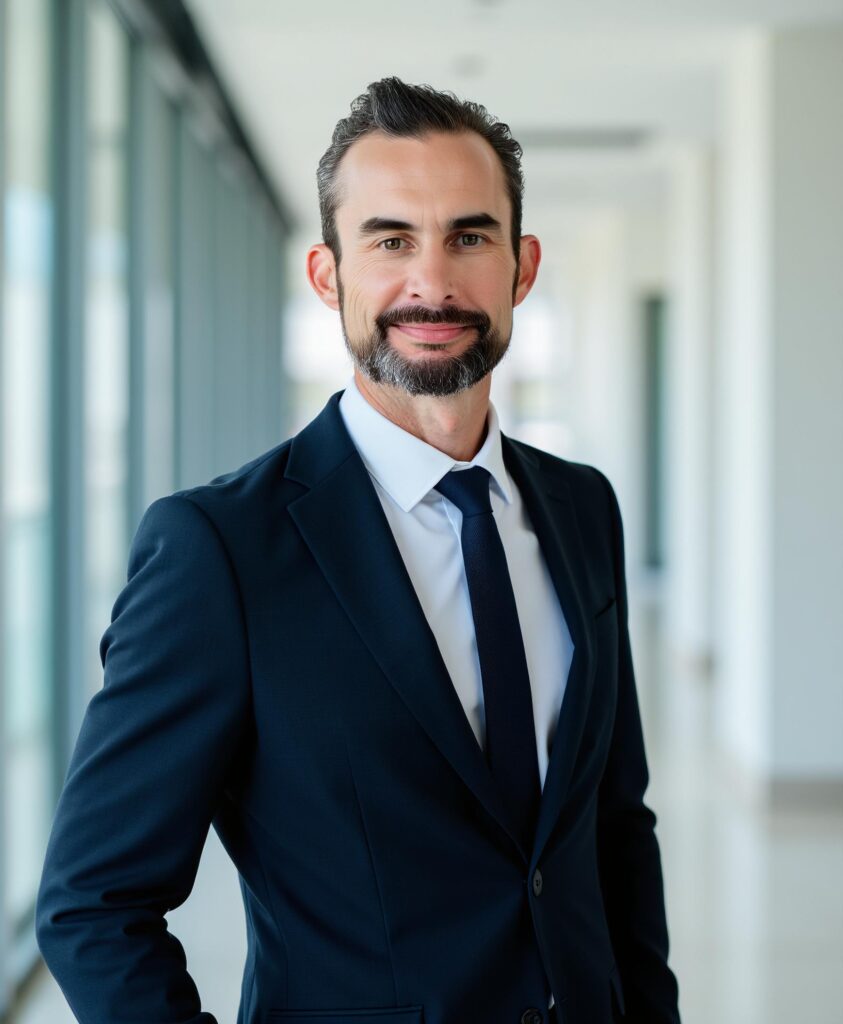
Jason A. Harris has spent nearly two decades representing personal injury victims throughout Arizona. His work spans personal injury cases, workplace accidents, auto accident litigation, and complex matters involving else’s negligence.
Jason’s background includes:
Experience handling car accident claims across Arizona including wrongful death claims, catastrophic injuries, and long-term medical impacts
Hands-on involvement in gathering medical records, preparing evidence, and communicating with auto insurance companies
A commitment to attorney–client communication 24/7
Having grown up working on a ranch and later serving in public defender roles, Jason brings a focus on client communication, problem-solving, and professionalism to every injury claim he handles.
He understands the physical, emotional, and financial toll of a car wreck and views each case as an opportunity to assist individuals during what can be a highly stressful and uncertain time.
A car accident caused by someone else’s careless behavior can happen anywhere in Peoria. Our firm frequently sees collisions resulting from:
Phone use, texting, and navigation apps contribute to many Peoria collisions.
High-speed corridors such as Loop 101, 75th Avenue, and Bell Road are frequent sites of speed-related crashes.
Alcohol- and drug-related crashes continue to affect Peoria families, often resulting in serious injuries or fatalities.
Intersections near Arrowhead Towne Center and 91st Avenue often experience traffic incidents caused by improper turns or missed signals.
Rear-end car crashes are extremely common in congested traffic zones.
Dust storms and heavy rains lead to multi-vehicle accidents and dangerous road conditions.
Vehicle malfunctions, roadway debris, animal crossings, and fatigued driving can also contribute to collisions.
Understanding how the accident occurred may help identify potentially liable parties.
Peoria continues to grow rapidly, increasing traffic volume and the likelihood of collisions. According to the Arizona Department of Transportation (ADOT), Maricopa County consistently records the highest number of motor vehicle accident cases in the state.
ADOT data shows:
Thousands of injury-related crashes occur each year across the Phoenix metro area.
A significant portion involve distracted driving, speeding, and impaired driving.
Many collisions result in broken bones, physical pain, and long-term physical therapy needs.
For national roadway safety context, the National Highway Traffic Safety Administration (NHTSA)
reports similar trends in speed-related crashes, distracted driving, and impaired driving.
These statistics highlight the importance of seeking medical attention promptly and understanding your legal rights when injured in a Peoria car accident.
When someone else’s negligence causes your car accident injuries, you have the right to pursue:
Economic damages such as medical expenses, lost income, and vehicle repairs
Non economic damages including emotional trauma, physical pain, and reduced quality of life
Compensation for property damage
Eligibility for wrongful death benefits in fatal crashes, including burial expenses
For national injury context, the Centers for Disease Control and Prevention (CDC) reports that motor vehicle injuries remain a leading cause of emergency medical treatment in the United States.
Many individuals unintentionally hurt their cases by speaking too freely to the insurance adjuster, accepting quick settlements, or making statements that could appear to admit fault. Before engaging with an other driver’s insurer, it is wise to consult a lawyer.
Your rights are important, and our role is to help you understand and navigate them.
As a full-service law firm handling Peoria auto cases, we assist clients with:
We review police reports, interview witnesses, examine photos, and analyze factors that contributed to the collision. National roadway safety insights are available through the Federal Highway Administration (FHWA).
We manage communication with insurance companies, ensuring your rights remain protected.
To support your personal injury claim, our legal team reviews treatment plans, medical records, and doctor evaluations.
We assess relevant documentation and costs that may affect your potential compensation.
We work to pursue compensation in line with applicable law and the specific facts of your case.
If settlement negotiations stall, we are prepared to evaluate litigation if a settlement cannot be reached.
We help families navigate wrongful death claims, including compensation for funeral and burial expenses. National fatal injury statistics can be reviewed through the CDC WISQARS database.
Whether your case involves an uninsured driver, a rideshare vehicle, a commercial truck, or a work vehicle, we are ready to assist.
Car accidents rarely happen at convenient times. That’s why our intake team is available 24/7 to connect you with our legal team to answer questions, provide updates, and begin evaluating your peoria car accident claim immediately.
You can expect personal attention and direct attorney involvement from the start.
You may contact us any time by phone or through our online contact form, and we aim to respond as soon as possible.
If you or a loved one were injured in a car accident in Peoria, you don’t have to navigate the legal process alone. Our team is here to assist with medical guidance, insurance concerns, and next steps toward pursuing financial compensation.
Harris Injury Law
1136 E Campbell Ave, Phoenix, AZ 85014
Call or text: (480) 800-4878
Submit our online contact form for a free consultation.
We are honored to support Peoria residents and are ready to help you understand your legal options and explore potential next steps under Arizona law.
to assist you with your car accident case.
Call or text now for a free consultation.
⭐⭐⭐⭐⭐
“After my Peoria car accident, I had no idea how to deal with the insurance adjuster or what steps to take next. Harris Injury Law explained everything clearly and handled the entire process. I felt supported the whole way.”
- M.R., Peoria, AZ
⭐⭐⭐⭐⭐
“Jason was the only attorney who took the time to walk me through my Peoria car accident claim. His communication was excellent, and I always felt like my case mattered.”
- M.M., Fletcher Heights
⭐⭐⭐⭐⭐
“Professional, responsive, and honest. Harris Injury Law helped me pursue a fair settlement after my auto accident. I’m grateful for their guidance.”
- M.M., Camino á Lago

Located at 1136 E Campbell Ave, Phoenix, AZ 85014. Harris Injury Law, PLLC specializes in auto and truck accidents and workers’ compensation. Speak directly with your lawyer from the beginning. Same-day and emergency consultations are available. You never pay out of pocket. Call us at any time – 24/7.
Harris Injury Law
We firmly believe that the internet should be available and accessible to anyone, and are committed to providing a website that is accessible to the widest possible audience, regardless of circumstance and ability.
To fulfill this, we aim to adhere as strictly as possible to the World Wide Web Consortium’s (W3C) Web Content Accessibility Guidelines 2.1 (WCAG 2.1) at the AA level. These guidelines explain how to make web content accessible to people with a wide array of disabilities. Complying with those guidelines helps us ensure that the website is accessible to all people: blind people, people with motor impairments, visual impairment, cognitive disabilities, and more.
This website utilizes various technologies that are meant to make it as accessible as possible at all times. We utilize an accessibility interface that allows persons with specific disabilities to adjust the website’s UI (user interface) and design it to their personal needs.
Additionally, the website utilizes an AI-based application that runs in the background and optimizes its accessibility level constantly. This application remediates the website’s HTML, adapts Its functionality and behavior for screen-readers used by the blind users, and for keyboard functions used by individuals with motor impairments.
If you’ve found a malfunction or have ideas for improvement, we’ll be happy to hear from you. You can reach out to the website’s operators by using the following email
Our website implements the ARIA attributes (Accessible Rich Internet Applications) technique, alongside various different behavioral changes, to ensure blind users visiting with screen-readers are able to read, comprehend, and enjoy the website’s functions. As soon as a user with a screen-reader enters your site, they immediately receive a prompt to enter the Screen-Reader Profile so they can browse and operate your site effectively. Here’s how our website covers some of the most important screen-reader requirements, alongside console screenshots of code examples:
Screen-reader optimization: we run a background process that learns the website’s components from top to bottom, to ensure ongoing compliance even when updating the website. In this process, we provide screen-readers with meaningful data using the ARIA set of attributes. For example, we provide accurate form labels; descriptions for actionable icons (social media icons, search icons, cart icons, etc.); validation guidance for form inputs; element roles such as buttons, menus, modal dialogues (popups), and others. Additionally, the background process scans all the website’s images and provides an accurate and meaningful image-object-recognition-based description as an ALT (alternate text) tag for images that are not described. It will also extract texts that are embedded within the image, using an OCR (optical character recognition) technology. To turn on screen-reader adjustments at any time, users need only to press the Alt+1 keyboard combination. Screen-reader users also get automatic announcements to turn the Screen-reader mode on as soon as they enter the website.
These adjustments are compatible with all popular screen readers, including JAWS and NVDA.
Keyboard navigation optimization: The background process also adjusts the website’s HTML, and adds various behaviors using JavaScript code to make the website operable by the keyboard. This includes the ability to navigate the website using the Tab and Shift+Tab keys, operate dropdowns with the arrow keys, close them with Esc, trigger buttons and links using the Enter key, navigate between radio and checkbox elements using the arrow keys, and fill them in with the Spacebar or Enter key.Additionally, keyboard users will find quick-navigation and content-skip menus, available at any time by clicking Alt+1, or as the first elements of the site while navigating with the keyboard. The background process also handles triggered popups by moving the keyboard focus towards them as soon as they appear, and not allow the focus drift outside it.
Users can also use shortcuts such as “M” (menus), “H” (headings), “F” (forms), “B” (buttons), and “G” (graphics) to jump to specific elements.
We aim to support the widest array of browsers and assistive technologies as possible, so our users can choose the best fitting tools for them, with as few limitations as possible. Therefore, we have worked very hard to be able to support all major systems that comprise over 95% of the user market share including Google Chrome, Mozilla Firefox, Apple Safari, Opera and Microsoft Edge, JAWS and NVDA (screen readers).
Despite our very best efforts to allow anybody to adjust the website to their needs. There may still be pages or sections that are not fully accessible, are in the process of becoming accessible, or are lacking an adequate technological solution to make them accessible. Still, we are continually improving our accessibility, adding, updating and improving its options and features, and developing and adopting new technologies. All this is meant to reach the optimal level of accessibility, following technological advancements. For any assistance, please reach out to