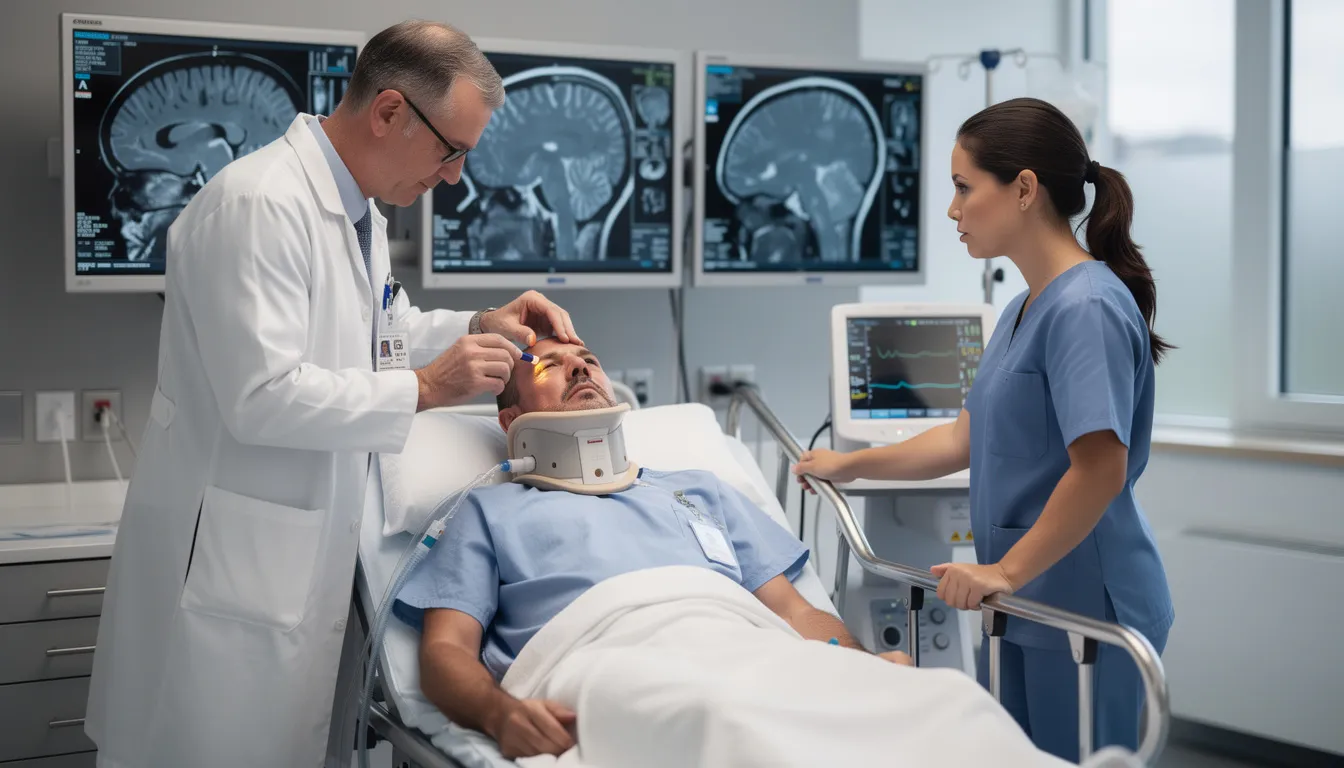
Traumatic Brain Injury After an Accident
Overview of Traumatic Brain Injury After An Accident
A traumatic brain injury after an accident is one of the most serious and life-altering outcomes a person can experience. A traumatic brain injury, often referred to as traumatic brain injury TBI, occurs when an external force causes disruption to normal brain function. This force may come from a violent blow to a person’s head, a rapid acceleration-deceleration event in a car crash, or an object that penetrates the skull.
A brain injury is different from a stroke or an anoxic injury. A stroke is caused by blocked or ruptured blood vessels, while an anoxic injury results from lack of oxygen to the brain. In contrast, a TBI is a brain caused by an outside force, such as a fall or motor vehicle crash. TBIs are part of a broader category of neurological disorders, but they are distinct because they stem from trauma.
The early stages after a head injury are critical. Prompt diagnosis and timely medical treatment can reduce swelling, restore proper blood flow, and limit secondary injuries that may lead to permanent brain damage. Immediate care at a certified trauma center tends to lead to better health outcomes.
Common Causes and Risk Events
According to the Centers for Disease Control and Prevention (CDC) under the U.S. Department of Health and Human Services, falls are the leading cause of traumatic brain injury in the United States, followed by being struck by or against an object and car accidents. Car accidents and other vehicle accidents remain a leading cause of TBI in adults.
Common events that cause TBI include:
- Motor vehicle crash or high-speed car accident
- Falls, especially among older adults
- Being hit by or against an object
- Assaults
- Sports injuries
- Cases such as shaken baby syndrome
Phoenix residents face unique risks due to heavy freeway traffic and construction growth. A sudden traumatic event on I-10 or Loop 101 can result in a serious injury, including blunt TBI where the brain rapidly shifts inside the skull.
Types Of Brain Injuries
Traumatic brain injuries can be classified as mild, moderate, or severe based on symptoms and the Glasgow Coma Scale. A mild traumatic brain injury, also known as mild TBI, may still significantly affect a person’s ability to work or concentrate. A severe traumatic brain injury or severe TBI can lead to coma, a minimally conscious state, or even what is medically called brain death.
TBIs are also categorized as:
- Closed head injuries
- Open head injuries or penetrating TBI
In addition, TBIs are divided into:
- Primary injuries, which occur at the time of impact and cannot be reversed
- Secondary injuries, which develop later due to swelling, lack of oxygen, or increased intracranial pressure
Primary damage may involve torn tissues and damaged brain cells, while secondary damage may involve fluid buildup, reduced oxygen, or impaired circulation.
Closed Head Injuries
Closed head injuries occur when the skull remains intact but the brain is injured internally. These are common in car crash scenarios where the head strikes a steering wheel or window, or when the head snaps backward violently.
In a high-speed collision, the brain can move within the skull in what doctors call coup contrecoup injuries. This means the brain first hits one side of the skull, then rebounds and strikes the opposite side. In other words, the brain bounces inside the skull.
Closed injuries can also include skull fractures and internal bleeding. Sometimes diagnostic imaging may initially appear normal, yet the person develops new or worsening symptoms. That is why monitoring during the early stages is so important.
Diffuse Axonal Injuries And Axonal Injuries
Diffuse axonal injuries are among the most serious forms of TBI. These injuries occur when rotational forces cause axonal injuries, meaning the long nerve fibers that connect brain cells are stretched or torn.
This type of injury is common in high-speed motor vehicle crash incidents. Even without a visible impact, rapid rotation can damage the nervous system at a microscopic level.
Prognosis varies widely. Some individuals recover within a few weeks, while others experience memory problems, changes in sleep patterns, and lasting impairment of brain function. Research suggests that recovery often continues for 6 to 24 months or longer, due to neuroplasticity, where the brain rewires itself around damaged areas.
Penetrating Injuries And Brain Tissue Damage
A penetrating TBI or open head injury occurs when an object pierces the skull and directly damages brain tissue. These injuries often involve bleeding and contamination.
A penetrating injury typically involves bleeding and may damage blood vessels, leading to loss of oxygen supply. Immediate neurosurgical consultation is essential. In many cases, emergency surgery is required to remove debris, repair damage, and relieve pressure inside the skull.
Hematomas, Hemorrhages, And Contusions
Head trauma may lead to hematomas and hemorrhages, which are collections of blood inside the skull. These may include:
- Epidural hematoma
- Subdural hematoma
- Intracerebral hemorrhage
These conditions often involve blood clots that compress brain tissue. A contusion is essentially a bruise on the brain, often caused by deceleration forces.
Emergency physicians typically order a ct scan as the first step in diagnostic imaging to detect acute bleeding. For more subtle injuries, magnetic resonance imaging may be used.
Prompt detection is critical because bleeding can cause increased intracranial pressure, reducing oxygen supply and damaging additional brain cells.
How TBI Affects Brain Tissue And Intracranial Pressure
After a TBI, the brain may swell. Because the skull is rigid, swelling increases intracranial pressure, which can compress vital structures and disrupt blood flow.
Secondary injuries can develop hours or days later. These secondary injuries may include swelling, oxygen deprivation, and reduced circulation. Without treatment, elevated pressure can cause severe brain damage or progress to brain death.
Initial care focuses on stabilizing the patient, reducing swelling, and maintaining adequate blood flow to prevent further injury.
Early Stages After A Head Injury
The early stages following a head injury require careful monitoring. Medical providers assess airway, breathing, and circulation first.
They evaluate level of consciousness using the Glasgow Coma Scale, which measures eye response, verbal response, and motor response. Serial exams are important because TBI symptoms can develop immediately or appear hours later.
Families should document symptom onset, accident details, and any unusual behavior.
Signs And Symptoms In The Early Stages
Symptoms vary depending on severity. Mild TBI symptoms may include:
- Headache
- Dizziness
- Nausea
- Fatigue
- Memory loss
Moderate or severe TBI may include:
- Prolonged unconsciousness
- Persistent vomiting
- Unequal pupils
- Severe headache
- Seizures
Cognitive changes may include confusion, slowed thinking, and difficulty concentrating. Emotional symptoms such as mood swings, depression, irritability, and frustration are also common. Children may show other unusual behavior, confusion, or sensory problems.
Any worsening symptoms or new neurological deficits require emergency evaluation.
Diagnosis And Imaging
Prompt diagnosis improves outcomes. Physicians use:
- Glasgow Coma Scale scoring
- Serial neurological exams
- Non-contrast CT for acute bleeding
- MRI for suspected diffuse injury
- Blood tests in some trauma protocols
CT scans are essential to detect bleeding and skull fractures quickly. MRI is more sensitive for diffuse axonal injuries.
Facilities such as the Barrow Neurological Institute provide advanced evaluation and CARF-accredited outpatient neuro-rehabilitation for TBI patients.
Acute Treatment And Neurocritical Management
Treatment depends on severity. In severe traumatic brain injury, care may include:
- Airway stabilization
- Mechanical ventilation
- Medication to reduce swelling
- Surgery to evacuate hematomas
- Procedures to relieve pressure inside the skull
Monitoring for complications such as infection and blood clots is essential. Seizure prophylaxis may be initiated when clinically appropriate.
Timely intervention can prevent long-term complications.
Rehabilitation And Long-Term Care After Brain Injuries
Recovery often requires a multidisciplinary approach. Comprehensive rehabilitation may involve:
- Physical therapy
- Occupational therapy
- Speech therapy
- Cognitive rehabilitation therapy
Cognitive rehabilitation therapy aims to restore normal brain function after injury. Medications such as antidepressants or anti-anxiety drugs may help manage emotional symptoms.
Significant healing may occur 6 to 24 months after injury. The Rancho Los Amigos Scale is commonly used to measure levels of cognitive functioning during recovery.
In Phoenix, patients may receive inpatient or outpatient care through facilities such as Banner University Medicine. The Brain Injury Alliance of Arizona provides advocacy, support groups, and resources. The Phoenix Adult Brain Injury Group meets every fourth Thursday of the month for support.
Special Considerations After Car Accidents
A car accident or motor vehicle crash often involves rapid deceleration forces. Even when seatbelts and airbags deploy properly, the head may experience rotational forces.
After any significant collision, medical evaluation is recommended. Document:
- Seatbelt use
- Airbag deployment
- Vehicle speed
- Loss of consciousness
Early imaging may be advisable after high-speed impacts, even if symptoms appear mild.
When To Seek Emergency Care For A Head Injury
Seek immediate care if there is:
- Repeated vomiting
- Severe or worsening headache
- Unequal pupils
- Weakness on one side
- Increasing confusion
Any decline in responsiveness should be treated promptly.
Prevention, Safety, And Post-Accident Steps
Prevention remains the best treatment. Wearing seatbelts and helmets reduces the risk of skull fractures and TBI. Fall-proofing homes can protect older adults, who face a high risk of falls.
Children should wear protective gear during sports to reduce the risk of head injuries. Establishing safe environments and avoiding high-risk activities can lower injury rates.
After an accident, keep detailed medical and accident records. Individuals who sustain a TBI in a car accident may have the right to pursue compensation, depending on the specific circumstances and applicable law. Insurance claims can be complex, and understanding your legal rights and options can be important after an accident.
You can learn more about your options by visiting our Phoenix Brain Injury Lawyer page or our Phoenix Personal Injury Lawyer page.
Resources, Follow-Up, And Research Directions
Ongoing research continues to improve understanding of diffuse injuries and oxygen monitoring. The National Institute of Neurological Disorders and Stroke supports research into new treatment approaches.
Follow-up care may include neuropsychological tests to assess memory, judgment, and concentration. Recovery may take months or years, and long-term management may continue well beyond the first year.
Frequently Asked Questions
Can someone recover from a traumatic brain injury?
Yes. Recovery depends on severity. A mild traumatic brain injury may resolve within weeks, while a moderate or severe TBI may require long-term therapy. Neuroplasticity allows some patients to regain lost skills over time.
What are the long term effects of traumatic brain injuries?
Long-term effects may include memory problems, communication difficulties, mood changes, and cognitive impairment. Some individuals experience permanent brain damage, while others improve gradually.
How long does a TBI take to recover?
Healing may occur over 6 to 24 months or longer. Significant improvement often happens in the first year, but therapy may continue beyond that.
How do you treat traumatic brain injury?
Treatment ranges from rest and monitoring for mild cases to surgery and intensive care for severe injuries. Rehabilitation and supportive therapy are key components of recovery.
Legal Guidance For Traumatic Brain Injury Victims In Phoenix
A traumatic brain injury after an accident can disrupt every part of a person’s life. When a TBI results from a car accident, fall, or other traumatic event caused by negligence, individuals may have legal options under Arizona law.
Harris Injury Law represents clients in Phoenix who have sustained serious brain injuries. Our attorneys have experience handling personal injury matters, including cases involving serious injuries. We advocate on behalf of our clients to seek compensation available under applicable law. Results depend on the specific facts of each case.
If you or a loved one suffered a traumatic brain injury after an accident, you may benefit from speaking with a lawyer about your situation. Contact Harris Injury Law at (480) 800-4878 to schedule a free consultation and explore your legal options.