Understanding Right of Way Laws in Arizona
Arizona drivers, cyclists, pedestrians, and even recent transplants often ask the same question after a near miss or an accident: who actually had the right of way? Understanding right of way laws in Arizona is essential for daily driving and for reducing the risk of a car accident. These rules determine when a vehicle, a person, or other road users may proceed, yield, or stop at an intersection, crosswalk, freeway ramp, or roadway.
This guide explains right of way laws clearly and practically, using real world examples and Arizona law to help motorists and pedestrians understand how these rules work in everyday traffic. The goal is simple: safer roads and fewer accidents caused by confusion or driver’s negligence.
Right of Way Laws Overview
Right of way laws are traffic laws that define who must yield and who may proceed in a given traffic situation. Under Arizona law, these rules apply to motorists, pedestrians, bicyclists, and drivers entering or crossing different streets, highways, and roadways.
Arizona’s right of way framework is set out across multiple statutes within Title 28 of the Arizona Revised Statutes, including provisions enforced by the Arizona Revised Statutes Title 28. Enforcement and safety guidance are also supported by the Arizona Department of Transportation and crash data tracked by the National Highway Traffic Safety Administration.
The purpose of right of way laws is accident prevention. By establishing predictable rules for yielding, stopping, and proceeding, Arizona law reduces conflicts at intersections, cross traffic points, crosswalks, and freeway ramps.
Why Right of Way Laws Matter for Arizona Drivers
Failing to yield is a leading cause of accidents in Phoenix and throughout Arizona. When a driver ignores a stop sign, misjudges oncoming traffic, or rushes through a yellow light, the result is often a collision that could have been avoided.
Right of way laws help determine fault after an accident. A driver who must yield the right and fails to do so may face traffic tickets, points on a license, civil liability, and in severe cases criminal charges. Understanding these laws helps drivers protect themselves and others on the road.
Who Has the Right of Way: Motor Vehicles, Pedestrians, and Cyclists
Motor Vehicle Responsibilities
Every motor vehicle operator must follow the same traffic laws regardless of vehicle size or speed. Drivers must yield at stop signs, obey traffic lights, and respect cross traffic at intersections. When turning left, the driver must yield to oncoming vehicles traveling in the opposite direction unless a protected signal allows the turn.
Motorists entering from an approach road, parking lot, unpaved roads, alley, or driveway must yield to traffic already on the continuing street or roadway.
Pedestrian Rights and Duties
Pedestrians have strong protections under Arizona law. Motorists must yield to pedestrians crossing within a marked or unmarked crosswalk. This includes pedestrians crossing when the light turns green or when traffic signals indicate a walk phase.
However, pedestrians also have responsibilities. Jaywalking is prohibited, and pedestrians cannot suddenly leave a curb and step into the path of a vehicle that cannot reasonably stop. Pedestrians crossing must obey traffic signals and ensure vehicles are stopped before proceeding.
Drivers must never pass a vehicle stopped at a crosswalk, especially when pedestrians crossing are present.
Cyclists and Right of Way
Bicycles are generally treated as vehicles under Arizona law. Cyclists must follow the same traffic laws as motor vehicles, including obeying traffic lights, stop signs, and right of way rules at intersections. When riding on the roadway, cyclists have the same rights and duties as other drivers.
Right of Way Rules and Yielding Hierarchy
Right of way rules are not optional. They create a clear yielding hierarchy to prevent conflicts.
Yield to the Right Rule
At an uncontrolled intersection, when two vehicles approach from different streets or highways at approximately the same time, the driver on the left must yield the right to the vehicle on the right. This rule applies even when no signs or traffic control signal are present.
First Arrival Priority
At intersections with stop signs, the vehicle that comes to a complete stop first has the right of way. If two vehicles arrive at the same time, the driver on the left must yield to the driver on the right.
Left Turn Yielding Requirements
A driver turning left must yield to oncoming traffic and oncoming vehicles traveling straight through the intersection. This includes vehicles approaching from the opposite direction and pedestrians crossing in the crosswalk.
Penalties for Failing to Yield
Failing to yield the right can result in fines, points on a driver’s license, increased insurance costs, and civil liability. In serious cases involving injury, failure to yield may support a claim based on driver’s negligence.
Controlled Intersections and Traffic Signals
A controlled intersection is one regulated by traffic lights, stop signs, or yield signs. Drivers must obey all traffic signals and signs and proceed only when permitted.
Traffic control devices include traffic lights, traffic signals, stop signs, yield signs, and pedestrian signals. Before proceeding, drivers should verify that the signal applies to their lane and direction.
Traffic Signal Rules Explained
Green Light
A green light allows drivers to proceed, but it does not grant absolute right of way. Drivers must still yield to pedestrians crossing lawfully and to vehicles already in the intersection.
When a light turns green, drivers should check for oncoming traffic and pedestrians before proceeding.
Yellow Light
A yellow light warns that the signal is about to turn red. Drivers should prepare to stop unless stopping safely is impossible.
Red Light
A red light requires a complete stop. Drivers must remain stopped until the light changes and it is safe to proceed.
Stop Sign Procedures
At any stop sign, drivers must come to a complete stop behind the stop line or before entering the intersection. Rolling stops are violations of traffic laws.
After stopping, drivers must yield to other vehicles and pedestrians already in the intersection or approaching so closely as to pose a hazard.
Four Way Stop Rules
At a four way stop, the first vehicle to arrive has the right of way. If two vehicles arrive at approximately the same time, the driver on the left must yield to the vehicle on the right.
Drivers should use turn signals, hand signals, eye contact, and patience to avoid confusion and proceed safely.
The Driver on the Right Rule in Practice
The driver on the right rule applies most often at uncontrolled intersections and four way stops. If two vehicles arrive at the same time, the driver on the left yields to the driver on the right.
Example: Two vehicles approach an uncontrolled intersection from different streets. Neither has a sign. Both stop. The vehicle on the right proceeds first.
Entering a Freeway and Merging Rules
Drivers entering a freeway must yield to traffic already on the freeway. Vehicles using an acceleration lane or ramp must adjust speed to merge safely and yield the right to existing traffic.
The freeway and highway traffic has priority. The entering vehicle must select a safe gap and merge without disrupting traffic flow.
Emergency Vehicles and Right of Way
Emergency vehicles with flashing lights and sirens have priority over all other vehicles. Drivers must yield immediately by pulling to the right side of the road and stopping when safe.
Arizona law also requires drivers to move over or slow down for stopped emergency vehicles on the roadway.
Emergency Vehicles at Intersections
If an emergency vehicle approaches an intersection, all other vehicles must yield, even if they have a green light. Drivers should clear the intersection and stop safely until the emergency vehicle has passed.
Special Situations: Alleys, Driveways, Roundabouts, and Pedestrians
Alleys and Driveways
A vehicle entering from an alley, driveway, parking lot, or unpaved road must yield to traffic on the continuing street.
Roundabouts
In a roundabout, vehicles entering must yield to traffic already circulating. Pedestrians in crosswalks at roundabout entrances have the right of way.
Pedestrian Crossings
All vehicles must yield to pedestrians waiting at a marked or unmarked crosswalk. Drivers must stop fully and allow the pedestrian to cross safely.
T Intersections and Unique Layouts
At a T intersection, the driver on the bottom road must yield to traffic on the through road. Vehicles on the continuing street have the right of way.
Accidents Involving Failure to Yield
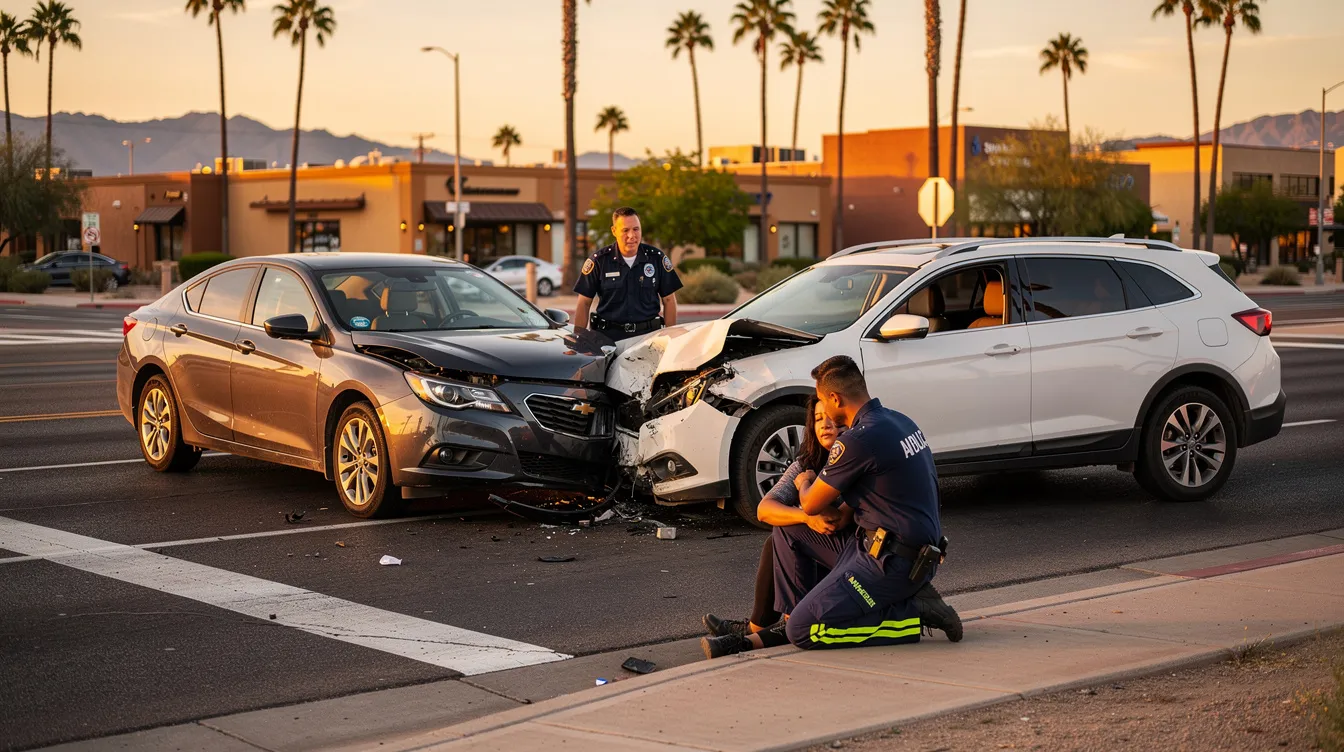
A failure to yield accident often results in side impact or left turn collisions. After an accident, safety comes first.
Immediate Steps After an Accident
Check for injuries and call emergency services if needed. Move to a safe location if possible. Document the accident scene with photos, including traffic signs, signals, vehicles, and roadway conditions.
Exchange information with other drivers but avoid admitting fault. Statements made at the scene may be used later.
Legal Advice After a Right of Way Accident
If a failure to yield accident results in injuries, legal guidance may help you better understand your rights under Arizona law, depending on the facts of your situation. Evidence such as police reports, witness statements, and traffic camera footage can be critical.
Accidents involving rideshare vehicles add additional complexity. For more information, see Harris Injury Law’s internal resource on Lyft and Uber accident claims.
Civil Liability and Driver’s Negligence
In some cases, a violation of right of way laws may be considered as part of a negligence analysis, depending on the specific facts and circumstances of the accident.
Why Right of Way Laws Protect Everyone
Right of way laws create order in traffic. When motorists, pedestrians, and cyclists understand and follow these rules, everyone benefits. Predictable behavior reduces accidents, injuries, and disputes over fault.
Legal Help and Free Consultation
This information is provided for general educational purposes only and is not intended as legal advice. Harris Injury Law assists Arizona residents in navigating traffic accident claims and understanding how right of way laws apply to their case.
A free initial consultation is available. No legal advice is provided unless a formal attorney-client relationship is established. Gathering medical records, accident reports, and insurance information before the consultation can help your attorney evaluate your situation and next steps.
Understanding right of way laws is not just about avoiding tickets. It is about protecting lives on Arizona roads and ensuring accountability when accidents happen. Contact us today at (480) 800-4878.