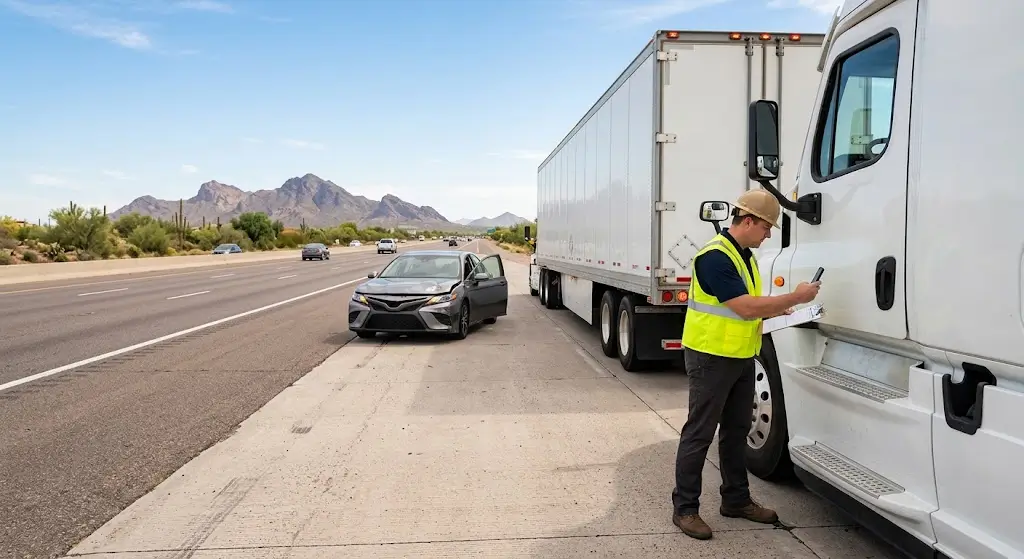
If you were hurt in a Lyft crash, the biggest insurance surprise may be that your own policy is not the right place to start. A Phoenix Lyft accident lawyer can help evaluate whether your personal insurance applies, whether rideshare exclusions affect coverage, and whether Lyft’s policy or another insurance policy may be available.
The main takeaway is simple: personal auto insurance is usually written for personal driving, not commercial rideshare activity. Once a rideshare driver logs into the Lyft app, insurance coverage may shift based on the driver’s app status.
For Phoenix drivers, passengers, pedestrians, and people hit by a Lyft vehicle, this distinction can decide who pays medical bills, who handles property damage, and whether a personal injury claim involves the at fault driver, Lyft’s policy, or multiple insurance policies.
Quick Answer: Why Personal Policy Limitations Matter
Most personal policies contain business use or livery exclusions. In plain terms, insurance companies often deny coverage when a vehicle is being used to transport passengers for money.
That does not always mean there is no coverage. It usually means the claim must be evaluated under rideshare insurance, the rideshare company’s insurance, the driver’s personal auto insurance, or another driver’s auto insurance policy.
Drivers should contact their own insurance company before driving for Lyft and ask whether their own policy covers rideshare activity. Without a rideshare endorsement, the driver’s personal policy may deny a claim, raise premiums, or cancel coverage.
How Rideshare Insurance Works In Phoenix
Rideshare insurance is a bridge between personal insurance and commercial insurance. It exists because Uber and Lyft drivers often use personal vehicles for business activity.
Arizona TNC rules recognize that coverage changes when a rideshare driver is logged into a digital network. The Arizona Department of Insurance and Financial Institutions rideshare resource explains that the driver, company, or both must provide insurance depending on app status.
Arizona also requires rideshare drivers to maintain personal insurance coverage. Arizona minimum mandatory liability limits are described as 25/50/15, but rideshare activity triggers separate TNC rules.
The key question is not only who caused the accident. It is also what the rideshare app showed at the exact time of the crash.
Lyft Insurance Phases and Coverage Rules
Lyft has three practical insurance tiers based on app status. Each phase changes the available liability coverage, first party coverage, and collision coverage.
When the app is off, Lyft does not provide insurance coverage. The driver’s personal insurance is usually primary, subject to the terms of the insurance policy.
When the app is on but no ride has been accepted, Lyft’s contingent coverage kicks in only if the driver’s personal insurance does not apply. According to Lyft’s official insurance disclosures, this period may include at least $50,000 per person for bodily injury, $100,000 per accident for bodily injury, and $25,000 for property damage.
When a ride is accepted or a passenger is inside the rideshare vehicle, Lyft’s commercial coverage generally becomes much broader. Lyft’s current disclosures describe at least $1 million in third-party auto liability coverage for covered accidents during an accepted ride.
Phase 0: App Off, Personal Auto Only
Phase 0 means the driver is not logged into the Lyft app. In this period, only the driver’s personal insurance applies in most cases.
If a Lyft driver is commuting for personal reasons with the app off, a standard car accident claim may proceed like any other Phoenix auto accident. Coverage usually comes from the driver’s personal auto insurance and any applicable uninsured motorist coverage or underinsured motorist coverage.
Insurers may still investigate past rideshare activity after a crash. If the driver failed to disclose regular rideshare work, the driver’s personal insurance may face underwriting consequences.
Phase 1: App On, Waiting For A Ride
Phase 1 is the most confusing coverage gap. The driver is logged into Lyft and available for requests, but has not yet accepted a ride.
Personal insurance policies in Phoenix typically exclude rideshare accidents during this period because the vehicle is available for commercial use. Arizona law allows carriers to exclude coverage while a driver is logged into a rideshare network unless the policy or rideshare endorsement expressly provides coverage.
This is why drivers typically need a rideshare endorsement to bridge the gap between a personal policy and Lyft’s limited liability coverage, which is not the same as full minimum liability coverage for every loss.
Phases 2 And 3: Accepted Ride Or Passenger Onboard
Phase 2 begins when an Uber or Lyft driver accepts a ride and is en route to the passenger. Phase 3 begins when the passenger is in the vehicle and continues until drop off.
During these phases, Lyft insurance is more likely to provide commercial insurance protection. During some accepted-ride periods, up to $1 million in liability coverage may be available, but available coverage is not the same as a guaranteed recovery. Any compensation depends on fault, injuries, damages, policy terms, and available evidence.
Arizona law also sets specific TNC coverage rules. Arizona Revised Statutes § 28-4038 requires at least $250,000 in primary commercial motor vehicle liability insurance during transportation network services and $1 million per incident when a passenger occupies the TNC vehicle.
Lyft may also maintain contingent comprehensive and collision coverage if the driver already carries it on the driver’s personal auto insurance. This coverage is generally tied to actual cash value, sometimes called actual cash, and may involve a deductible.
Why Personal Insurance May Be Invalid During A Lyft Trip
Rideshare activities are classified as commercial use under many personal auto insurance policies. That is the core reason why personal auto insurance can become invalid during a Lyft accident.
An insurer may deny the injury claim because the driver failed to disclose rideshare work, used the vehicle for paid passenger transport, lacked a rideshare endorsement, or triggered a livery exclusion.
The practical result can be stressful. A Lyft driver may face no collision coverage for the Lyft vehicle, limited liability coverage, a personal auto policy that may be voided, cancellation, and higher premiums.
Determining Liability After A Phoenix Lyft Accident
Coverage is only one part of the claim. Liability decides who is legally responsible for the crash.
Potentially liable parties may include the Lyft driver, another driver, a vehicle owner, a rideshare company under limited circumstances, or multiple parties whose conduct contributed to the rideshare crash.
Arizona follows comparative negligence principles, meaning fault can be divided among the people or entities involved. If an injured person is partly at fault, compensation may be reduced by the percentage of fault assigned.
Proof of fault is especially important when another driver caused the crash. Photos, police reports, witness names, and app data can help show what happened.
Common Phoenix Rideshare Accident Risk Factors
Rideshare drivers face higher accident risks because they spend more time on the road. More road time can mean more exposure to freeway congestion, airport traffic, construction zones, sudden lane changes, and distracted drivers.
Phone distraction is a leading rideshare concern. The National Highway Traffic Safety Administration (NHTSA) reported that distracted driving killed 3,208 people and injured 315,167 people in 2024.
Lyft drivers may also face fatigue from long hours, unfamiliar routes, speeding pressure to accept more rides, passenger distractions, and complicated pickups near Sky Harbor, downtown Phoenix, Tempe, Scottsdale, and major freeways.
What To Do Immediately After A Lyft Rideshare Accident
Call 911 to report the accident immediately, especially if anyone has serious injuries, traffic is blocked, a hit-and-run occurred, or a driver appears impaired.
Seek medical attention within 24 hours of the accident. Early medical records help connect the lyft crash to your symptoms, treatment plan, medical expenses, and future care needs.
Document the accident scene with photos and witness information. Capture vehicle positions, damage, road hazards, construction zones, traffic signals, rideshare decals, and visible injuries.
Report the accident through the Lyft app within 24 hours when possible. Save screenshots showing the trip, driver details, route, receipt, pickup, drop-off, and any driver communications.
Do not give a recorded statement to insurance adjusters without first speaking with a lawyer, especially when app status or serious injuries are disputed.
Evidence To Preserve For An Injury Claim
A strong rideshare claim usually depends on fast evidence preservation. Save police reports, medical records, medical bills, witness statements, app records, and claim correspondence.
For injured passengers, the trip receipt is often one of the most important documents. It can prove whether the crash happened during Phase 2 or Phase 3.
For injured drivers, app logs can show whether the crash happened during Phase 0, Phase 1, or an accepted ride. If coverage is disputed, a Lyft accident lawyer may request trip data.
For third-party drivers, cyclists, or pedestrians, scene photos and witness statements may help establish distraction, fatigue, speeding, or route confusion.
Proving Damages: Medical Bills, Lost Wages, And More
Compensation in a personal injury claim may include economic and non economic damages. Economic damages include medical bills, lost wages, vehicle repair costs, rental car expenses, and out-of-pocket costs.
Non economic damages may include pain and suffering, emotional distress, inconvenience, and loss of enjoyment of life. Arizona has no general cap on personal injury damages because Arizona Constitution Article 2, Section 31 prohibits such limits.
Lost wages can be claimed after a rideshare accident when medical restrictions, appointments, pain, or disability keep someone from working. Employer letters, pay stubs, tax records, and provider notes can help prove lost income.
Punitive damages may apply in severe negligence cases, but they are not automatic and require facts showing especially serious misconduct.
Filing An Injury Claim After A Rideshare Auto Accident
The first step is identifying every possible insurance policy. A rideshare accident cases review may involve the Lyft policy, the driver’s personal insurance, the other driver’s own insurance, uninsured motorist coverage, underinsured motorist coverage, MedPay, and other first party coverage.
The order of notice depends on who was injured and who caused the crash. Passengers may notify Lyft and the at fault driver. A Lyft driver hit by another motorist may notify Lyft, the other driver’s insurer, and the driver’s own insurance carrier.
Each claim submission should include police reports, medical records, photographs, repair estimates, wage documentation, and receipts. Keep copies of claim numbers, emails, letters, adjuster names, and call dates.
When To Hire A Phoenix Lyft Accident Lawyer
Consider contacting an experienced attorney or Lyft accident lawyer early if the crash caused serious injuries, disputed app status, denied insurance coverage, multiple insurance policies, lost wages, or a wrongful death claim.
A lawyer can help determine whether Lyft insurance, the rideshare company’s insurance, the driver’s personal insurance, or another policy should provide insurance coverage.
Harris Injury Law handles personal injury matters, including rideshare accident claims involving Lyft. Each case depends on its own facts, evidence, insurance coverage, and applicable law. The firm highlights attorney Jason Harris‘ background in personal injury and workers’ compensation matters. In some cases, injured rideshare drivers may have questions involving more than one type of insurance or claim.
How A Lyft Accident Lawyer Strengthens Your Case
A lawyer can send preservation letters to Lyft, request trip logs, analyze the driver’s app status, identify the applicable rideshare insurance policy, and obtain driver communications when necessary.
In disputed cases, the legal team may work with reconstruction, medical, vocational, or economic experts to explain crash forces, future care, reduced earning capacity, and daily limitations.
Attorneys also negotiate firmly with insurance companies to pursue compensation and fair compensation under Arizona law. If settlement discussions do not resolve the case, a personal injury lawsuit may be filed when litigation is necessary.
Common Disputes And How To Counter Them
One common dispute is app status. An insurer may argue that Lyft’s policy does not apply because the driver was not logged in, had not accepted a ride, or was outside covered activity.
Trip receipts, phone screenshots, Lyft logs, witness statements, GPS data, and driver messages can help counter that denial. The more precise the timeline, the harder it is for insurance companies to avoid the correct coverage phase.
Another dispute is the value of medical expenses and future care. Medical records, provider opinions, bills, imaging reports, therapy notes, and work restrictions can support the injury claim.
Compensation Types Available In A Rideshare Injury Claim
A claim may help recover compensation for ambulance bills, emergency care, surgery, therapy, medication, future medical treatment, lost wages, loss of earning capacity, and other economic losses.
A claim may also include non economic damages for pain, anxiety, sleep disruption, scarring, and loss of normal activities.
Property damage may include vehicle repair, replacement value, towing, storage, rental expenses, and damaged personal property.
In fatal Uber and Lyft accidents, eligible family members may pursue a wrongful death claim that can include funeral costs, lost support, and other damages permitted by Arizona law.
Special Scenarios: Hit-And-Run, Uninsured Drivers, And Injured Lyft Drivers
If an unidentified driver flees the scene, uninsured motorist coverage may become important. A prompt police report is especially important in hit-and-run cases.
If the other driver has too little insurance, underinsured motorist coverage may help fill part of the gap. The available coverage depends on policy language, app status, and the facts of the accident.
If a Lyft driver is injured by another driver, the claim may involve the other driver’s liability coverage, Lyft’s available first party coverage, the driver’s own policy, and other benefits.
Timeline, Deadlines, And Arizona Statute Considerations
Arizona generally gives injured people two years to file a personal injury lawsuit. Arizona Revised Statutes § 12-542 applies to many injury, death, and property damage claims.
Do not wait until the deadline is close. App data, witness memory, surveillance footage, dashcam files, and scene evidence can disappear quickly.
Early legal consultation is important when the case involves Uber or Lyft accident coverage, multiple parties, disputed app status, or several forms of coverage.
FAQs Specific To Phoenix Lyft Crashes
Who pays during the app-on waiting period? During Phase 1, the driver’s personal auto insurance may deny coverage because the driver is logged into the Lyft app for commercial activity. Lyft’s contingent coverage may apply, but it is more limited than active-ride coverage.
When does Lyft insurance become primary? Lyft insurance usually becomes more significant once a ride is accepted. During Phases 2 and 3, the rideshare company’s insurance may provide up to $1 million in liability coverage for covered accidents, but that coverage limit is not a guaranteed recovery. Compensation depends on fault, injuries, damages, policy terms, and available evidence.
Can I recover lost wages after a Lyft accident? Yes, lost wages can be part of a rideshare accident claim when medical evidence shows the crash affected your ability to work. Save pay records and medical restrictions.
What if my personal insurer cancels my policy? A cancellation or nonrenewal can happen if the insurer believes the driver used the vehicle commercially without proper disclosure. Drivers should ask about a rideshare endorsement before driving for Lyft and keep written confirmation of coverage.
Does Arizona cap rideshare injury damages? Arizona does not impose a general statutory cap on personal injury damages. Compensation still depends on liability, causation, coverage, and proof.
Do I need a lawyer if Lyft already opened a claim? You may still benefit from legal guidance if the claim involves serious injuries, disputed coverage, multiple insurers, or pressure from insurance adjusters.
Conclusion And Next Steps
A Phoenix Lyft crash can involve more than one insurer and more than one legal theory. The key is to identify the driver’s app status, preserve evidence, and avoid assuming that personal insurance will cover a rideshare crash.
Start by collecting police reports, medical records, medical bills, wage records, repair estimates, trip receipts, and screenshots from the Lyft app. Then keep a written record of every conversation with insurance adjusters.
Harris Injury Law represents Phoenix rideshare accident victims, drivers, passengers, pedestrians, and families dealing with serious injury or wrongful death claims. Client testimonials and case examples may describe past matters handled by the firm, but they do not guarantee or predict a similar result. Every case depends on its own facts, injuries, evidence, insurance coverage, and applicable law.
For guidance from a Phoenix Lyft accident lawyer, contact Harris Injury Law at (480) 800-4878 for a free consultation. The firm is available to help you explore your legal options, identify available coverage, and pursue fair compensation under Arizona law.