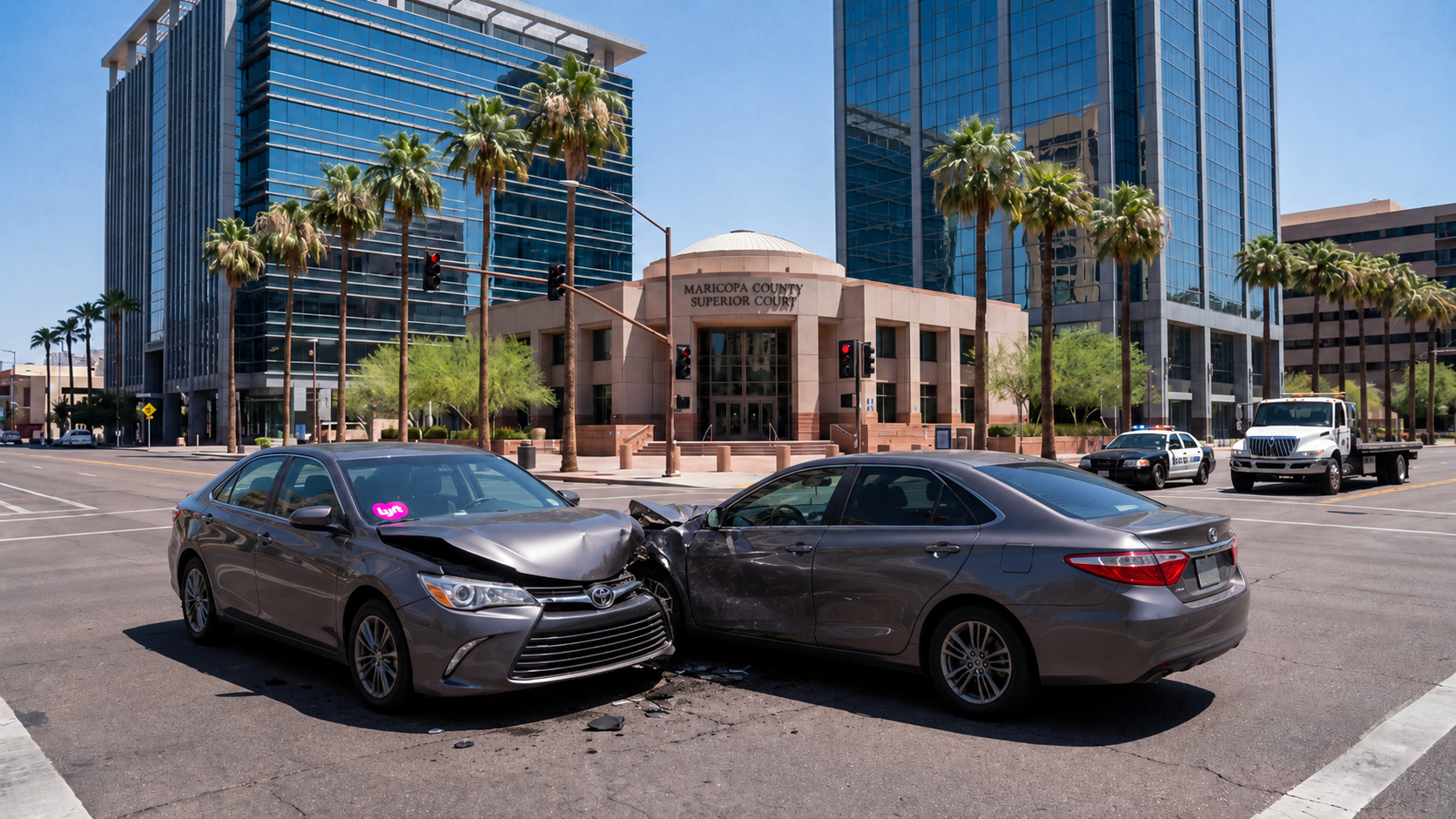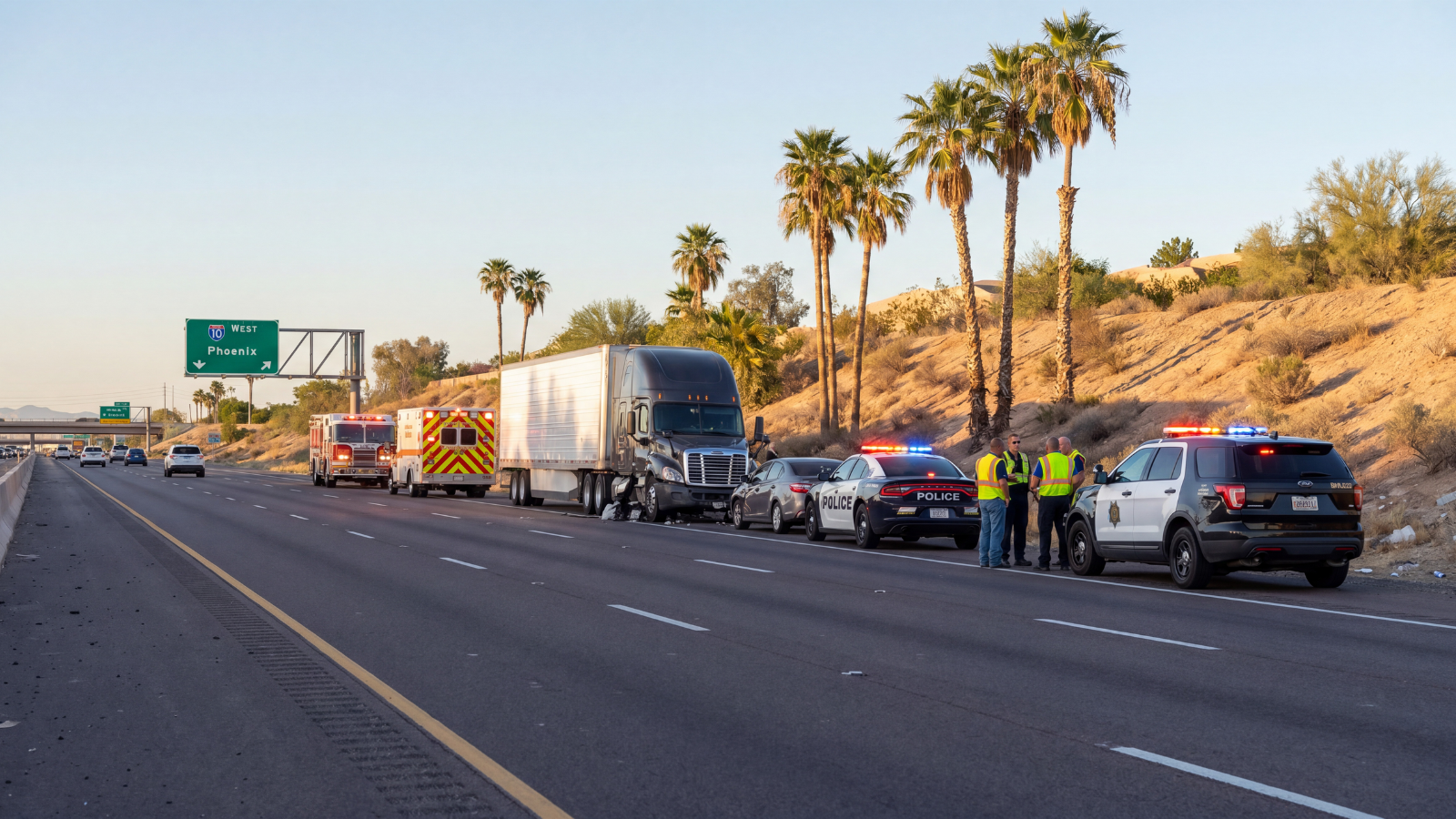
If a Lyft ride in Phoenix was hit by a careless third-party driver, a Phoenix Lyft accident attorney can help you understand which driver, insurer, and policy may be responsible.
Suing a third party driver applies when someone other than the Lyft driver caused or contributed to the crash. This may include another motorist who ran a red light, failed to yield, sped through a congested intersection, drove distracted, or drove while impaired.
A Phoenix Lyft accident case is different from a standard car accident because several parties and multiple insurance policies may be involved. The Lyft driver may have one policy, the at fault driver may have another, Lyft may have commercial insurance available depending on app status, and the injured person may also have uninsured or underinsured motorist coverage.
The key legal question is not simply, “Was this a Lyft accident?” The more important question is, “Who caused the crash, what insurance coverage applies, and what evidence proves the injury claim?”
A successful Lyft accident claim may help an injured passenger, driver, pedestrian, or family pursue compensation for medical expenses, lost income, property damage, pain and suffering, future medical bills, and other losses recognized under Arizona law.
Quick Answer: When Can You Sue a Third-Party Driver After a Lyft Accident?
You may be able to sue a third-party driver after a Lyft accident when that driver’s negligence caused the collision. Examples include a driver rear-ending the Lyft vehicle, turning left across traffic, drifting into the rideshare vehicle, ignoring a stop sign, or causing a multi-car crash.
In that situation, the claim usually begins with the at fault driver’s insurance or the at fault insurance company. If the insurer accepts liability and offers fair compensation under Arizona law, the case may resolve without filing a personal injury lawsuit.
If the insurance company refuses to accept fault, disputes your injuries, delays payment, or offers less than the evidence supports, a personal injury lawsuit may become necessary. The lawsuit may name the at fault driver, and in some cases it may include multiple parties if more than one person or company contributed to the crash.
A passenger who did not cause the collision may have a claim against one or more responsible parties, but recovery depends on the facts, liability, damages, and available insurance coverage. The challenge is identifying the proper liability source, whether that is a third-party motorist, the Lyft driver, an uninsured driver, a vehicle manufacturer, or another responsible party.
This is where a Lyft accident lawyer can be useful. Rideshare accident claims often turn on evidence that may disappear quickly, including app data, GPS records, dashcam footage, crash-scene photos, and witness statements.
Who This Guide Helps
This guide is for personal injury victims involved in a Phoenix rideshare accident where another driver may have caused the crash. It applies to Lyft passengers, Lyft drivers, occupants of other vehicles, pedestrians, cyclists, and families considering a wrongful death claim.
It is also useful if you were in an Uber or Lyft accident and are not sure whether your claim should be against the rideshare driver, a third-party driver, a rideshare company, or your own insurance company.
Many injured people assume Lyft is automatically responsible because the crash happened during a ride. That is not always how liability works. Rideshare companies often classify rideshare drivers as independent contractors, which can complicate direct claims against the company.
However, that does not mean an injured person has no options. A claim may still proceed against the at fault driver, a commercial insurance policy, the driver’s personal insurance, or other available coverage depending on the facts.
How Liability Works in a Phoenix Rideshare Accident
In Arizona, the party at fault for the accident is generally responsible for damages caused by the crash. That can include a third-party driver, a Lyft driver, another rideshare vehicle, a commercial driver, or multiple parties.
Arizona is also a comparative negligence state. This means fault may be divided among multiple people or entities, and compensation may be reduced by the injured person’s assigned percentage of fault.
For Lyft passengers, comparative fault is often less of a central issue because passengers usually have no role in operating either vehicle. For drivers, pedestrians, or cyclists, insurance adjusters may try to argue shared responsibility.
Liability and insurance coverage are related, but they are not the same. Liability answers who caused the crash. Insurance coverage answers which insurance policy may pay for the damages.
A Phoenix Lyft accident case can therefore involve two investigations at once: one into how the motor vehicle accident happened and another into which coverage applied at the exact moment of impact.
App-Status Insurance Tiers Matter
Rideshare insurance coverage varies by the driver’s app status. In a Lyft accident case, the most important timing question is whether the driver was offline, waiting for a ride request, on the way to pick up a passenger, or actively transporting a passenger.
If the Lyft app was off, the driver’s personal insurance usually controls. This is the period most similar to an ordinary auto accident.
If the Lyft app was on and the driver was waiting for a ride request, limited rideshare-related coverage may apply. Lyft’s public insurance resource states that coverage can increase to $50,000 per person, $100,000 per accident for bodily injury, and $25,000 for property damage in many covered waiting-period situations through Lyft’s official insurance resources.
If a ride request was accepted or the passenger was already in the Lyft vehicle, higher commercial coverage may apply. Under Arizona Revised Statutes § 28-4038, transportation network company insurance requirements include different coverage levels when the driver is logged into the app and when the driver is providing transportation network services.
Driver’s Personal Insurance vs Commercial Insurance
A driver’s personal insurance may apply when the Lyft driver is offline. However, many personal auto insurance policies exclude commercial or rideshare activity unless the driver purchased a rideshare endorsement.
That is why the phrase driver’s personal insurance matters so much in a rideshare accident case. The policy may cover the crash, deny coverage, or limit coverage based on whether the app was active.
Commercial insurance may apply when the Lyft driver is actively providing rideshare services. Uber and Lyft provide significant coverage during rides, and victims may receive up to $1 million in liability coverage when the applicable policy and facts support that layer.
A third-party driver’s insurance can still be the primary claim source when that driver caused the crash. For example, if another vehicle runs a red light and strikes the Lyft vehicle while you are a passenger, the first claim may be against that at fault driver.
The complexity begins when that driver has minimum liability coverage, no insurance, disputed fault, or insufficient bodily injury limits. In those cases, multiple insurance companies may dispute who pays, which policy is primary, and whether UM/UIM coverage applies.
Common Third Parties to Investigate After a Phoenix Lyft Accident
The most obvious third party is another driver. This may be a commuter, delivery driver, commercial truck operator, taxi driver, tourist driver, or an Uber or Lyft driver from a different rideshare platform.
Other possible third parties include a vehicle manufacturer if a defective part contributed to the crash, a maintenance company if negligent repairs caused a failure, a bar or business in limited alcohol-related scenarios, or a public entity if dangerous roadway conditions played a role.
Common causes of third-party Lyft crashes include distracted driving, failure to yield, unsafe lane changes, speeding, impaired driving, tailgating, red-light violations, and sudden stops in airport or downtown traffic.
NHTSA warns that any non-driving activity can increase crash risk, and the National Highway Traffic Safety Administration (NHTSA) reported that 3,208 people were killed in crashes involving distracted drivers in 2024.
Fatigue can also increase accident risk for rideshare drivers and other drivers who spend long hours on Phoenix roads. Late-night airport pickups, freeway commutes, and event traffic can add to the risk when drivers are tired, hurried, or splitting attention between traffic and phone-based navigation.
In 2024, Arizona recorded 121,107 total crashes, according to Arizona Department of Transportation (ADOT). Because Lyft-specific crash data may not be easy to identify from public dashboards, a lawyer handling a rideshare accident claim should review the rideshare data, police report, and insurance records for the specific crash.
Evidence To Build a Strong Phoenix Lyft Accident Case
Gathering evidence is crucial after a rideshare accident. The first few hours and days can matter because vehicles are repaired, apps update, witnesses become harder to locate, and video footage may be overwritten.
Start with accident scene evidence if you can do so safely. Photograph vehicle positions, visible damage, skid marks, broken glass, debris, traffic signals, lane markings, rideshare pickup areas, weather conditions, and visible injuries.
Take screenshots of the Lyft app showing the ride, route, driver information, trip time, pickup point, drop-off destination, and any messages related to the ride. You should report the incident through the Lyft app after an accident, but keep your description brief and factual.
A police report can help identify drivers, vehicles, insurance carriers, witnesses, citations, and initial fault observations. It is not the final word on liability, but it is an important starting point in the legal process.
Scene, Medical, and Digital Evidence
Seek medical attention immediately after a rideshare accident, even if symptoms seem manageable at first. Neck injuries, back injuries, concussions, soft tissue trauma, and internal injuries may worsen after the initial adrenaline fades.
Keep organized copies of your medical records and bills as evidence. Treatment timelines can show how symptoms developed, what care was recommended, whether you followed medical instructions, and how the injuries affected your daily activities.
Medical evidence should include emergency room records, urgent care notes, imaging results, specialist referrals, physical therapy records, prescriptions, work restrictions, surgical recommendations, and future medical bills estimates.
Digital evidence may include dashcam video, traffic-camera footage, surveillance footage from nearby businesses, Lyft ride data, GPS logs, phone records, and vehicle event data if serious injuries are involved.
Witness statements can also become important. A neutral witness who saw the third-party driver speeding, texting, or failing to yield may help counter insurance adjusters who try to shift blame.
Filing a Lyft Accident Claim Against a Third Party
Filing a Lyft accident claim against a third party usually begins by identifying the correct defendant and the correct insurance carrier. This may sound simple, but rideshare accident claims can involve multiple names, vehicles, policies, and business entities.
First, collect the police report number and confirm the at fault driver’s name, address, license information, plate number, and insurer. Then report the accident to authorities by calling 911 if you have not already done so at the scene.
Second, report the crash to Lyft through the Lyft app immediately. The report creates a record within the rideshare platform and may help preserve key trip information.
Third, notify relevant insurers, but avoid detailed recorded statements until you understand your rights. Insurance adjusters may ask broad questions that later become disputed, especially in cases involving multiple insurance policies.
Fourth, send preservation letters to Lyft, the drivers, insurance companies, potential commercial carriers, and any business that may have camera footage. These letters should request that evidence be preserved before deletion or repair.
Fifth, file injury claim paperwork with the correct insurer. Depending on the facts, that may be the at fault driver’s insurance, Lyft’s insurer, the Lyft driver’s carrier, your own insurance company, or more than one carrier.
Insurance Coverage in Uber and Lyft Accidents
Insurance coverage in Uber and Lyft accident cases usually depends on three periods: app off, app on and waiting, and accepted ride or active trip.
When the app is off, personal auto insurance generally applies. If a driver is simply using a personal vehicle for private reasons, the case is similar to a standard car accident case.
When the app is on and the driver is waiting for a ride request, coverage may increase above ordinary minimum liability coverage. Arizona law and rideshare company policies should both be reviewed because the statute, the app status, and the actual insurance policy can affect available coverage.
When a ride is accepted or a passenger is in the rideshare vehicle, Lyft may provide substantial liability coverage. Uber and Lyft provide $1 million liability coverage during rides in many covered situations, but the exact policy language must be reviewed.
Arizona requires minimum liability coverage of $25,000 per person in certain statutory contexts, and many ordinary drivers carry only limited coverage. That can create problems when a third-party driver causes serious injuries but does not have enough bodily injury coverage.
Some rideshare drivers also carry private insurance plans or endorsements. Others do not. Because rideshare drivers may carry private insurance plans with exclusions, endorsements, or gaps, verifying the actual policy is essential.
UM/UIM, Collision Coverage, and Coverage Gaps
If the third-party driver has no insurance or insufficient coverage, you may need to turn to uninsured or underinsured motorist coverage. This may come from your own insurance company, the Lyft policy, or another applicable policy depending on the facts.
Your own insurance company may also become involved if you have collision coverage, medical payments coverage, uninsured motorist coverage, or underinsured motorist coverage.
Collision coverage may help with vehicle damage if you were driving your own vehicle and were hit by a rideshare vehicle or another at fault driver. It does not resolve bodily injury damages by itself.
Multiple insurance companies may each try to limit responsibility. One insurer may blame the third-party driver, another may argue the Lyft driver contributed, and another may say its policy was not active because of app status.
This is why complex insurance layering is one of the main challenges in Lyft accident cases. A legal team can review available policies, evaluate priority, and help address coverage disputes or avoidable delays.
Calculating Damages in a Phoenix Lyft Injury Claim
Damages in a Phoenix Lyft accident case may include economic damages, non economic damages, and, in limited cases, punitive damages. The value depends on the facts, injuries, treatment, documentation, liability, and available insurance.
Economic damages include measurable financial losses. These may include medical bills, ambulance charges, emergency treatment, surgery, physical therapy, medication, assistive devices, lost income, reduced earning capacity, and property damage.
Medical expenses should be organized by provider, date, diagnosis, treatment type, amount billed, amount paid, and remaining balance. This helps show the full cost of care instead of relying on scattered bills.
Lost income may include missed work, reduced hours, used PTO, missed bonuses, lost business opportunities, and diminished earning capacity. If injuries affect future work, vocational and economic analysis may be needed.
Property damage may include repair costs, replacement value, rental vehicle costs, towing charges, storage fees, car seat replacement, phones, laptops, luggage, or other property damaged in the crash.
Economic Damages
Economic damages often begin with medical expenses and lost income, but they should not stop there. A serious rideshare accident may create months or years of costs that are not obvious in the first settlement conversation.
Future medical bills may include follow-up visits, pain management, injections, surgery, rehabilitation, home modifications, and long-term care. A demand letter should explain why future care is reasonably related to the accident.
Future lost earnings may apply if the injured person cannot return to the same job, has permanent work restrictions, or loses the ability to advance in a career. These damages require careful documentation because insurance companies often dispute future losses.
For self-employed victims, lost income may require tax records, invoices, contracts, calendars, bank statements, and proof of canceled work. The more organized the records, the easier it is to explain the financial impact.
Non-Economic and Punitive Damages
Non economic damages address human losses that do not come with a simple invoice. These may include pain and suffering, emotional distress, loss of enjoyment of life, sleep disruption, anxiety while riding in vehicles, and limitations on family activities.
A journal can help document these losses. Short entries about pain levels, missed activities, medical appointments, mobility limits, and emotional effects may support the claim.
Punitive damages may be available in limited cases involving especially reckless or outrageous conduct. Impaired driving, extreme speeding, or intentionally dangerous behavior may raise punitive damages questions, but they are fact-specific and not automatic.
A Lyft accident attorney should connect damages to evidence. Insurance companies are more likely to evaluate a claim seriously when damages are supported by records, credible testimony, medical opinions, and a clear explanation of causation.
Arizona Deadlines for a Phoenix Lyft Accident Case
Arizona law generally gives two years to file a personal injury lawsuit. The deadline is found in Arizona Revised Statutes § 12-542, which applies to many injury, wrongful death, and property damage claims.
This does not mean you should wait two years. Evidence can disappear quickly, and rideshare data may require prompt preservation.
Exceptions can shorten or change the deadline. Claims involving public entities, defective roads, government vehicles, or certain public agencies may involve much shorter notice rules.
A wrongful death claim may have its own timing issues, depending on the date of death and the eligible claimants. Families should speak with an experienced attorney as soon as practical to protect deadlines and evidence.
Prompt attorney contact is also important because insurers may request statements, medical authorizations, or settlement paperwork before the injured person understands the long-term effects of the crash.
Steps To Take Immediately After a Phoenix Rideshare Car Accident
Call 911 after a rideshare accident if anyone is injured, traffic is blocked, vehicles are unsafe, or there is a dispute about what happened. Request a police response and ask how to obtain the report number.
Seek medical attention immediately after a rideshare accident. Follow all discharge instructions, attend follow-up appointments, and tell providers that the injury came from a rideshare-related crash.
Document the accident scene with photos and witness information. If you are a Lyft passenger, screenshot the ride, driver name, trip route, receipt, and any messages in the app.
Exchange information with all drivers. Get names, phone numbers, license plates, driver’s license information, insurance cards, and vehicle details.
Report the accident through the rideshare app immediately. Keep the report factual and avoid guessing about speed, fault, or injury severity before medical evaluation.
Avoid posting about the crash on social media. Insurance adjusters may review posts, photos, check-ins, and comments to argue that injuries are exaggerated.
Contact a rideshare accident attorney for legal guidance before giving recorded statements or signing a broad medical release. A free consultation can help you understand the claim path before insurers control the conversation.
How Harris Injury Law Helps With Third-Party Lyft Accident Claims
Harris Injury Law handles personal injury cases involving car accidents, rideshare accidents, third-party liability, and complex insurance disputes across Arizona. Our Phoenix rideshare accident lawyer page explains how Uber and Lyft claims can involve independent contractor issues, app status, and multiple insurance companies.
Attorney Jason Harris has experience in personal injury and workers’ compensation matters, which may be helpful when a rideshare crash also involves a person who was working at the time of the collision. For example, a passenger, delivery driver, airport worker, or rideshare driver may have overlapping claims that require careful coordination.
Harris Injury Law’s Our Attorneys page notes Jason Harris’s experience with both personal injury and workers’ compensation matters. That dual background can help when a Phoenix Lyft accident case involves a third-party claim, a work-related injury, and insurance lien issues.
A legal team can preserve evidence, request Lyft ride data and GPS logs, obtain police and witness statements, review medical records, identify every insurance policy, communicate with insurance companies, and prepare a demand letter.
If settlement discussions do not resolve the case, the attorney may file a personal injury lawsuit, conduct discovery, take depositions, request documents, work with experts, and prepare for mediation or trial.
Negotiation, Settlement, and Litigation in Phoenix Lyft Accident Cases
Some Lyft accident cases settle within months after medical treatment stabilizes and liability is clear. Others take longer because injuries are serious, fault is disputed, or several insurance companies disagree over coverage.
A demand letter usually starts formal settlement negotiations. It should explain liability, medical treatment, medical bills, lost income, property damage, non economic damages, future care, and the available insurance coverage.
Insurance adjusters may respond with questions, requests for records, comparative fault arguments, or settlement offers. A firm negotiation strategy focuses on evidence, damages, policy limits, and Arizona law rather than pressure tactics.
Mediation may be useful before trial. In mediation, both sides meet with a neutral mediator to explore settlement, narrow disputes, and evaluate risk.
Litigation may be necessary if the insurance company refuses to evaluate the claim fairly, disputes bodily injury causation, blames the wrong person, or refuses to disclose important policy information.
Trial preparation includes identifying witnesses, organizing exhibits, preparing medical testimony, reviewing accident reconstruction evidence, and presenting the case clearly to a judge or jury.
Phoenix-Specific Considerations in Lyft Accident Cases
Phoenix rideshare crashes often happen near Sky Harbor, downtown Phoenix, Roosevelt Row, Camelback Road, Scottsdale Road, Loop 202, I-10, I-17, Tempe, Mesa, Glendale, and event venues where rideshare pickup zones can become congested.
Airport traffic can create sudden lane changes, abrupt stops, distracted navigation, and confusion around pickup locations. Downtown nightlife traffic can involve impaired drivers, pedestrians, scooters, and rideshare vehicles stopping in tight spaces.
Tourist drivers may be unfamiliar with Phoenix road design, heat-related visibility issues, freeway speeds, and local traffic patterns. These factors do not automatically prove fault, but they can help explain how a collision occurred.
A Phoenix Lyft accident lawyer should consider the location, time of day, traffic pattern, weather, nearby businesses, traffic cameras, and whether rideshare pickup or drop-off activity affected vehicle movement.
The strongest rideshare accident case usually combines local context with hard evidence. Photos, timestamps, police reports, GPS logs, medical records, and witness statements are stronger than assumptions about how the crash happened.
Frequently Asked Questions About Suing a Third Party in Phoenix Lyft Accidents
Should I Sue the Lyft Driver or a Third Party?
You should pursue the party whose negligence caused the crash. If the Lyft driver caused the collision, the claim may focus on the Lyft driver and any applicable rideshare insurance.
If another driver caused the crash, the claim may focus on that at fault driver and the at fault driver’s insurance. If both drivers contributed, the claim may involve multiple parties and multiple insurance policies.
The best answer depends on the police report, vehicle damage, witness statements, app status, traffic laws, and available insurance coverage.
Do I Need a Phoenix Lyft Accident Lawyer?
You may benefit from a Phoenix Lyft accident lawyer if you have serious injuries, disputed fault, delayed treatment issues, multiple insurers, an uninsured driver, or questions about Lyft app status.
A lawyer can identify coverage, preserve evidence, calculate future medical costs, organize the injury claim, communicate with insurance adjusters, and prepare litigation if necessary.
You may also want legal guidance if an insurer asks for a recorded statement or sends a release. Once a release is signed, it may end your claim even if future medical problems develop.
How Long Will My Phoenix Lyft Accident Case Take?
A straightforward lyft accident claim may resolve in several months after medical treatment is complete and liability is clear. A disputed case involving serious injuries, multiple insurance companies, or litigation may take one to three years or longer.
The timeline depends on treatment duration, crash investigation, policy verification, evidence preservation, expert review, negotiation, mediation, court scheduling, and whether trial becomes necessary.
No attorney can guarantee a timeline. The practical goal is to move the case forward while protecting the evidence needed to pursue fair compensation under Arizona law.
What If the Third-Party Driver Has No Insurance?
If the third-party driver has no insurance, you may need to review uninsured motorist coverage. This may involve your own insurance company, the rideshare policy, or another applicable insurance policy.
If the driver has insurance but not enough coverage, underinsured motorist coverage may become important. This is common when the injuries are serious and the at fault driver carries only minimum liability coverage.
Do not assume there is no recovery path simply because one driver is uninsured. Rideshare accidents can involve complex insurance layers that require a careful policy review.
Can Lyft Passengers Pursue Compensation If They Were Not at Fault?
Yes, a Lyft passenger may pursue compensation when another person’s negligence caused the crash. The passenger typically does not need to prove they were driving safely because they were not driving.
The main issue is identifying the at fault driver and available coverage. The claim may involve the third-party driver, the Lyft driver, Lyft-related insurance, UM/UIM coverage, or several policies.
Passengers should still gather evidence, seek medical care, report the crash through the Lyft app, and avoid making assumptions about which insurer will pay.
Next Steps After a Phoenix Lyft Accident Caused by a Third-Party Driver
If you were injured in a Phoenix Lyft accident caused by a third-party driver, start by gathering the documents that can protect your claim. Save the police report number, medical records, medical bills, Lyft receipt, screenshots, photos, witness information, insurance letters, repair estimates, and missed-work records.
Then speak with an accident lawyer who understands rideshare services, commercial insurance, multiple insurance policies, and the legal process for third-party claims in Arizona.
Harris Injury Law is available to help injured Lyft passengers, drivers, pedestrians, and families explore their legal options after a Phoenix rideshare accident. The firm can evaluate the crash, identify available coverage, preserve evidence, and pursue compensation available under Arizona law.
To discuss your case, contact Harris Injury Law at (480) 800-4878 for a free consultation. The firm handles Lyft accident cases, third-party liability claims, and complex personal injury cases in Phoenix.