Skip to content
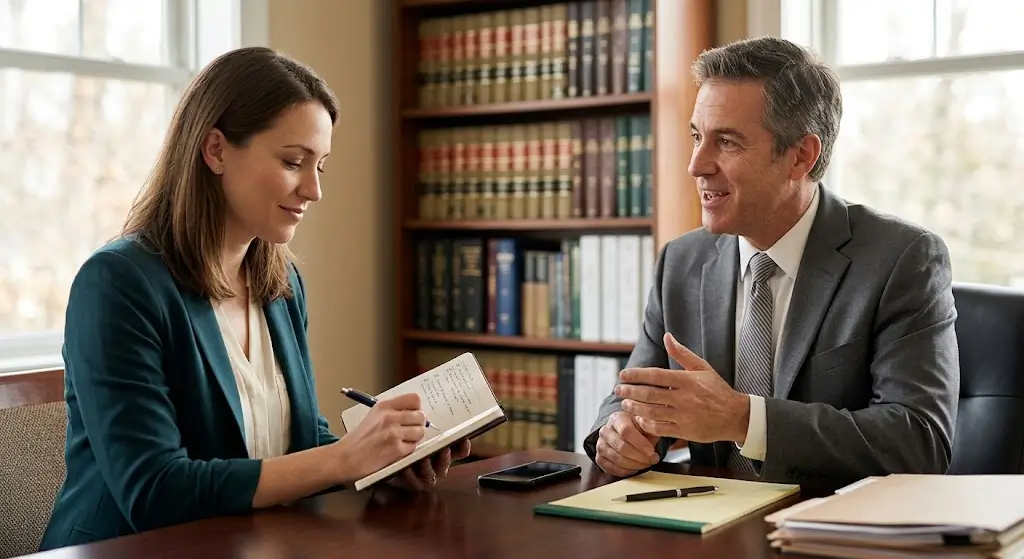
A free consultation is usually treated as the firm evaluating your case. It should run the other way too. The questions below have specific right answers, and how a firm handles them tells you more in twenty minutes than any amount of advertising. Take them with you, and ask every firm you meet including this one.
Could a government entity be involved in my case?
This is the fastest competence test there is, and it should come up unprompted. Where a city, town, county, the State, a school district, a transit operator, or a public university may share responsibility, A.R.S. § 12-821.01 generally requires a formal notice of claim within 180 days not two years served on the official authorized to accept service, stating a specific settlement amount with the facts supporting it.
What a good answer sounds like: they ask what vehicle hit you, whether a signal or road condition contributed, and where exactly it happened before telling you the deadline. They should also know the entity has to be named correctly. Gilbert is a town, not a city. A public university in Arizona is governed by the Arizona Board of Regents, which handles service centrally rather than through the campus.
Red flag: You have two years as the first and only answer.
Is my deadline actually two years?
Several situations run shorter, and each is a hard bar. A firm that handles these regularly will screen for all of them:
| Situation | Real deadline |
| Public entity involved | 180 days notice, then 1 year § 12-821.01 |
| You are on workers’ compensation and a third party caused it | 1 year § 23-1023 |
| Strict liability dog bite | 1 year §§ 11-1025, 12-541 |
| Uninsured motorist claim | Policy conditions, often shorter than any statute |
The workers’ compensation one is the least known. If you are receiving benefits and do not bring the third-party action within a year, § 23-1023 provides that it is deemed assigned to the compensation carrier. Ask directly whether the firm handles both sides, because the two claims run on separate tracks with different lienholders.
Which court would my case be filed in?
Specific local knowledge, and the answer differs by county in ways that matter. Civil injury suits above $10,000 go to the Superior Court in the county where the crash happened; smaller matters go to a justice court, and municipal courts hear none of it.
Two answers reveal genuine familiarity. Justice court precincts are local Highland serves Gilbert from the same building as Gilbert Municipal Court, San Tan serves Chandler, and Tempe is split between University Lakes and Kyrene. And Pima County handles smaller cases differently from the rest of Arizona: instead of compulsory arbitration, cases seeking no more than $50,000 go to the FASTAR program, where the plaintiff elects between an expedited trial and an arbitration-style hearing, a choice that affects appeal rights.
Ask what happens if the case is filed. Under Rule 26.2 the case is assigned a tier that fixes the discovery period, though in practice most car accident cases resolve without a trial and the firm should be able to sketch how long that typically takes.
What are you sending out this week to preserve evidence?
The answer should be immediate and specific, because most of the proof expires fast. Ask what goes out in the first days:
- A preservation demand, before camera footage overwrites business, doorbell, and parking structure systems commonly cycle within days.
- A hold on the vehicle. The event data recorder leaves with the car when the insurer takes it for salvage, and it records speed, braking, throttle, and steering before impact.
- Commercial records, if a truck was involved. Federal rules require a motor carrier to retain hours-of-service and electronic logging records for only six months, against your two-year filing deadline.
Red flag: a firm that talks about sending a demand letter but has no plan for the evidence that supports it.
Where will you look for coverage beyond the other driver’s policy?
Arizona’s minimum limits are $25,000 per person and $50,000 per accident under A.R.S. § 28-4009, which a single surgery can exhaust. Whether you recover what your claim is worth often depends on finding additional layers rather than on proving fault.
A capable answer names several without prompting: your own underinsured and uninsured motorist coverage, a commercial policy behind a work or delivery vehicle, the tiered coverage that shifts with app status in a rideshare collision, a dram shop claim where a licensee over-served the driver, and a resident family member’s policy.
Ask one more: Do you negotiate the medical liens, or pay them at face value? Provider liens and health plan reimbursement come out of your recovery, so that work changes your net substantially and it is not automatic.
What exactly does this cost, and what if we lose?
Nearly every injury firm works on contingency, so no fee unless we win distinguishes nobody. Three narrower questions do:
- What is the percentage, and does it increase if a lawsuit is filed?
- Is the fee calculated before or after case costs are deducted? That ordering changes your net materially and is rarely volunteered.
- If we recover nothing, do I owe case costs at all? Some agreements absorb them; others hold the client liable regardless of outcome. Both are lawful and very different.
Ask for the fee agreement to read in advance rather than at signing. A firm that will not send it beforehand has answered a different question. Our breakdown of what a personal injury lawyer costs in Arizona covers the structure.
Who will I actually be talking to in month four?
Ask who handles your file day to day, who prepares you for a deposition, and whether the attorney in front of you stays on the case if it is litigated. High-volume advertising firms often run files through case managers with attorney involvement at defined points not necessarily worse, but you should know which model you are buying. It is much of why some clients choose a smaller firm.
Two more worth asking: whether anyone at the firm is board certified by the State Bar’s Board of Legal Specialization in Personal Injury and Wrongful Death under ER 7.4 an Arizona lawyer may not claim specialist status without it and how often the firm actually files suit, since insurers price offers according to which firms litigate.
Why Near Me Genuinely Matters Here
Proximity is not really about the drive to an office. It is about whether the firm knows the county’s procedure, the local justice court precinct, the corridors where your crash happened, and the adjusters handling claims in that market.
Arizona makes that concrete. A Pima County case runs through FASTAR while a Maricopa County case of the same size goes to compulsory arbitration. A notice of claim against a town must name it as a town. Fault gets apportioned under Arizona’s pure comparative negligence rule, which differs from most states and changes what a partly-at-fault claim is worth.
When you search for the best car accident lawyers near me, prioritize firms with direct experience in your specific city’s courts and insurance market.
Frequently Asked Questions
What should I ask a car accident lawyer at a free consultation? Whether a government entity could be involved, what your real deadline is, which court the case would be filed in, what they are sending out this week to preserve evidence, what coverage layers they will look for, the fee percentage and whether it steps up on filing, whether you owe case costs if there is no recovery, and who handles your file day to day.
How do I know if a lawyer really knows my local courts? Ask which justice court precinct serves the address where the crash happened, and what happens procedurally if the case is filed. Arizona has county-level differences; Pima County refers cases seeking no more than $50,000 to the FASTAR program rather than compulsory arbitration, which is the sort of detail a firm handling those cases answers without looking up.
Does it matter if a car accident lawyer is nearby? Less for convenience than for knowledge. What matters is familiarity with the county’s procedure, the local court precinct, the roads where the crash happened, and the carriers handling claims in that market. Much of a case is handled remotely, so physical distance alone is a weak filter.
What is the most important deadline question to ask? Whether anything shortens the two-year rule. A public entity claim generally requires notice within 180 days, a third-party claim while receiving workers’ compensation must be brought within one year, a strict liability dog bite claim runs one year, and uninsured motorist coverage is governed by policy conditions that can be shorter still.
How can I verify a lawyer’s credentials in Arizona? The State Bar of Arizona maintains a public record of licensed attorneys including admission date and any public discipline. The Bar’s Board of Legal Specialization separately certifies specialists in Personal Injury and Wrongful Death, and under ER 7.4 no Arizona lawyer may state or imply specialist status without that certification.
Should I hire the firm with the most advertising? Advertising spend measures marketing budget, not case handling. The answerable questions are who works your file, whether the firm files suit when offers are inadequate, how it handles liens, and whether it screened your specific deadlines at intake.
Bring the List to Your Consultation
You are choosing someone to make decisions about money and deadlines on your behalf. The questions above have specific answers, and the differences between firms show up in them far more clearly than in any advertisement.
For what it is worth against this list: Jason A. Harris has practiced personal injury and workers’ compensation law in Arizona since 2006, clients speak with him directly rather than a case manager, cases run on a contingency fee with no attorney fee unless compensation is recovered, and the fee agreement setting out cost terms is provided in writing before signing.
Harris Injury Law, PLLC 1136 E Campbell Ave, Phoenix, AZ 85014 (480) 800-4878
Request a consultation or meet our attorneys. Consultations are free and carry no obligation. Every case depends on its own facts; no outcome can be promised or predicted.
This article provides general information and is not legal advice. Reading it creates no attorney-client relationship. Arizona rules, court programs, and Bar requirements change; verify current details with the State Bar of Arizona and the relevant court. Consult a licensed Arizona attorney about your situation.
Reviewed by Jason A. Harris, Harris Injury Law, PLLC.