Skip to content

A car accident in Arizona doesn’t live on just one record; it can appear on your ADOT driving record for three to five years, on your insurance company’s claims history for up to seven years, and, if a citation was issued, in court records that last even longer. Which record matters most usually depends on why you’re asking: a lender or employer looks at one, your insurer looks at another, and the court system keeps its own file entirely. None of them are updated on the same schedule, which is why two people involved in the exact same crash can end up with two very different answers when they ask “is this still on my record?”
Not One Record, Three
Most drivers assume there’s a single master file that tracks every accident they’ve ever had. In reality, Arizona accidents can end up in three separate systems, each with its own retention rules and its own audience.
Your ADOT motor vehicle record (MVR) is the state’s official driving history, the one an employer, court, or insurance underwriter requests directly from the Arizona Department of Transportation. Your CLUE report is a private industry file maintained by LexisNexis that insurance companies check before writing you a policy. And if a citation was issued, the court record for that citation lives with the relevant municipal or justice court, separate from both of the above. A single fender-bender can generate an entry in one, two, or all three of these systems, depending on how it was handled at the scene; a crash with no citation and no claim might touch none of them, while a cited, injury-involved wreck touches all three at once.
Your Official ADOT Record: How Far Back It Actually Goes
If you request your own driving record through ADOT, you’ll notice the agency actually offers two different versions. An uncertified record costs $3 and covers a three-year driving history; this is the version most insurers and employers pull for routine checks. A certified record costs $5 and covers five years, and it’s the version typically required for court proceedings, CDL applications, or formal disputes.
Both versions are requested online at AZ MVD Now, or by mailing a notarized Motor Vehicle Record Request form to MVD. Because these records contain personal information covered by the federal Driver’s Privacy Protection Act, you’ll need to state a “permissible use” checking your own record is always allowed, but pulling someone else’s requires a qualifying reason under that law.
The CLUE Report: The Seven-Year File Most Drivers Don’t Know Exists
Here’s the piece most Arizona drivers have never heard of. Nearly every major auto insurer LexisNexis reports roughly 99.6% of the industry feeds claims data into a shared database called C.L.U.E. (Comprehensive Loss Underwriting Exchange). When you apply for a new policy or renew an existing one, your insurer pulls this report, which can show up to seven years of auto claims history.
The important catch: CLUE tracks claims, not fault. If another driver hit you and you filed a claim with your own insurer even for a windshield or a rental car that claim shows up on your CLUE report regardless of who caused the crash. This is a major reason a not-at-fault accident can still affect how a new insurer prices your policy, even when your driving record itself is clean. Under the federal Fair Credit Reporting Act, you’re entitled to request a copy of your own LexisNexis consumer disclosure report at no cost, which is worth doing before you shop for new coverage.
Does Every Minor Accident Even Make the Record?
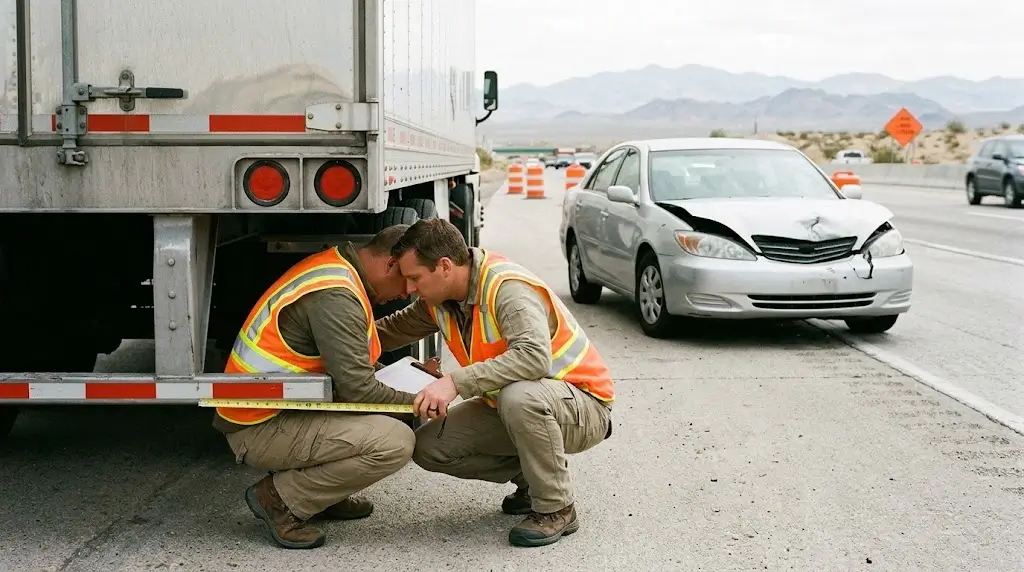
Not every fender-bender generates an official record. Under A.R.S. § 28-667, an officer is only required to file a written accident report when the crash involves bodily injury, a death, property damage exceeding $2,000, or a citation. Below that threshold a low-speed parking lot bump with no citation officers typically completes only a minimal information exchange, and no formal report reaches ADOT.
That doesn’t mean the incident disappears entirely, though. If either driver files an insurance claim, it can still land on a CLUE report even when it never touched an official state record, one more reason the two systems don’t always tell the same story.
Does It Follow You If You Move Out of State?
Your CLUE report follows you anywhere, since it’s tied to you as a policyholder rather than to Arizona, specifically a new insurer in another state can still pull up to seven years of claims history regardless of where you lived when the accident happened. Your MVD record works differently. States share serious driver information through the National Driver Register (NDR), a federal database that flags license suspensions, revocations, and serious traffic convictions when you apply for a license elsewhere. Routine, non-cited accidents generally don’t feed into the NDR at all so a fender-bender with no citation typically won’t surface when you apply for an out-of-state license, even though it may still sit on your Arizona MVR and your CLUE file.
Two Myths Worth Clearing Up
Myth: any at-fault accident requires an SR-22. An ordinary at-fault crash does not trigger an SR-22 filing on its own in Arizona. SR-22 is reserved for specific violations, DUI convictions, a third insurance violation within 36 months, or a court order tied to a pattern of serious offenses.
Myth: an accident automatically adds points to your license. Arizona’s point system is tied to citations for moving violations, not accidents themselves. Without a citation for speeding, failing to control the vehicle, or another violation, the crash alone typically doesn’t add points, even though it may still show up on your MVR as an incident.
What to Do If a Not-Your-Fault Accident Is Still Hurting You
Arizona is a pure comparative negligence state under A.R.S. § 12-2505, meaning fault is often split by percentage rather than assigned entirely to one driver and insurers sometimes get that split wrong. Avoiding the common mistakes after a car accident at the scene makes a fault dispute much easier to win later. If your rates went up or a claim shows against you for a crash you didn’t cause, a few steps help:
- Request the CLUE report and MVR both, and compare what each actually says.
- Ask your insurer in writing for the specific fault determination and the evidence behind it.
- Gather the police report, photos, and witness statements from the original crash.
- Dispute an inaccurate fault call directly with the insurer, and escalate to the Arizona Department of Insurance and Financial Institutions if it isn’t resolved.
For a deeper look at how fault and reporting requirements work under Arizona law, our guide to Arizona car accident laws walks through the reporting duties and comparative negligence rules in more detail.
When to Bring in a Phoenix Car Accident Lawyer
Record and rate disputes are frustrating, but they’re rarely the biggest issue after a real crash, unresolved injuries, medical bills, and a fault determination that shortchanges your claim usually matter more. Harris Injury Law is the car accident lawyer phoenix drivers call when a disputed record starts costing them money. We can pull the same records an insurer relies on, challenge an inaccurate fault split, and make sure a disputed accident doesn’t quietly cost you more than it should whether that’s a denied claim, an inflated premium, or a settlement that doesn’t reflect what actually happened. Keep in mind that Arizona’s statute of limitations gives injured drivers only two years from the crash date to file a personal injury claim, so record disputes shouldn’t delay getting your case evaluated.
Frequently Asked Questions
How many years does an accident affect my Arizona insurance rate? Most insurers factor an accident into pricing for three to five years, though the exact window varies by carrier and by how serious the claim was.
Can I get an accident removed from my CLUE report if it wasn’t my fault? You can dispute inaccurate information directly with LexisNexis, similar to disputing a credit report error, but a legitimate claim even on a no-fault crash generally stays on file for the standard seven-year window.
Does an Arizona accident show up on a background check? A standard employment background check doesn’t automatically include driving history; employers who want that information request an MVR separately, and typically only for driving-related positions.
Do I need an SR-22 after a routine at-fault accident in Arizona? No. SR-22 filings in Arizona are triggered by specific violations like DUI or repeated insurance lapses, not by an ordinary at-fault crash on its own.
How do I get a copy of my own Arizona driving record? Request it online through AZ MVD Now for $3 (three-year, uncertified) or $5 (five-year, certified), or submit a notarized Motor Vehicle Record Request form by mail.
This article is general information, not legal advice. Insurance retention periods and rate impacts vary by carrier verify specifics with your own insurer.
If a disputed accident or an inaccurate fault call is affecting your record, your rates, or a claim you’re owed, call Harris Injury Law at (480) 800-4878 for a free consultation, or request a consultation online. We’ll help you sort out what’s actually on your record and what it should say.
Reviewed by Jason A. Harris, Attorney, Harris Injury Law, PLLC