Skip to content

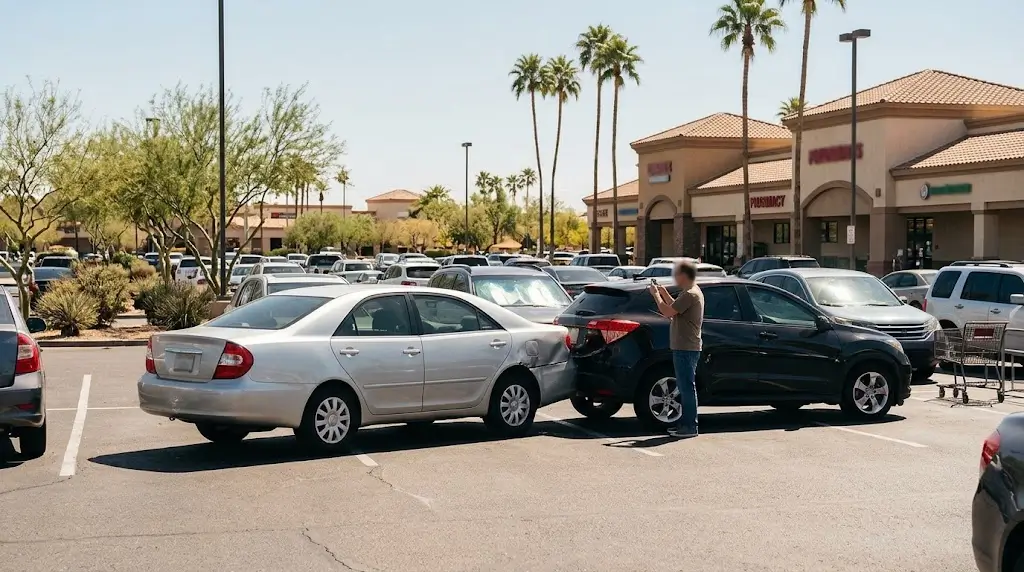
A parking lot crash can leave drivers with different versions of what happened. One may be reversing while another moves through the aisle. There is no automatic rule that splits every parking lot accident 50/50. Fault depends on the drivers’ actions, the layout, available evidence, and Arizona law. Speak with a car accident lawyer Phoenix to discuss your situation and the next steps you may take.
Who Is at Fault in a Parking Lot Accident?
A driver who failed to use reasonable care may bear responsibility. The location alone does not decide fault. Insurers may consider vehicle movement, visibility, signs, markings, impact points, witnesses, and video. Arizona law specifically requires drivers to reverse only when they can do so with reasonable safety and without interfering with other traffic. That rule appears in A.R.S. § 28-891. It is an important rule, but it does not decide every parking lot dispute by itself.
Two Cars Back Out at the Same Time
When two drivers reverse from opposite spaces, both may have contributed. Timing, sightlines, and impact points can help explain what happened. Neither driver should assume the insurer will assign equal fault.
A Moving Car Hits a Vehicle Reversing Into the Aisle
A driver leaving a space must check for vehicles and pedestrians. A driver moving through the aisle must also respond reasonably to visible hazards. The full sequence matters.
A Driver Hits a Parked Car
If a moving driver hits a parked car, photographs and witness accounts may help establish what happened. Arizona law also sets out specific duties when a driver strikes an unattended vehicle. The driver must stop and notify the owner or leave a written notice with the required information. See A.R.S. § 28-664.
A Parking Space Dispute or a Pedestrian Crash
Drivers sometimes collide while competing for a space or turning across a parking aisle. Other crashes involve pedestrians walking between parked cars or crossing a vehicle entrance. Signs, painted markings, visibility, vehicle speed, and each person’s movements may help clarify responsibility. No single detail settles every case.
What Arizona Law Says About Parking Lot Crashes
Arizona law sets out duties that expressly apply to crashes on public or private property. Under A.R.S. § 28-663, drivers must provide identifying information after a crash involving injury or death. The rule also covers damage to a vehicle that someone is driving or attending. Drivers must provide reasonable assistance to injured people. A.R.S. § 28-662 also covers crashes on public or private property that damage an attended vehicle. Drivers must stop, remain at the scene, and meet the information duties in § 28-663.
A driver who hits an unattended car has separate duties under § 28-664. Leaving without stopping or providing the required notice can create legal problems. Arizona also follows a comparative negligence rule. Under A.R.S. § 12-2505, a claimant’s proven share of fault can reduce damages in proportion to that share. Being partly responsible does not automatically end every claim. The rule has legal limits, and the facts still matter. Harris Injury Law explains this concept in its guide to Arizona comparative fault.
What Should You Do After a Parking Lot Accident?
Start with safety. If anyone may be injured or there is immediate danger, call 911. Move vehicles only when safe.
Then take these steps:
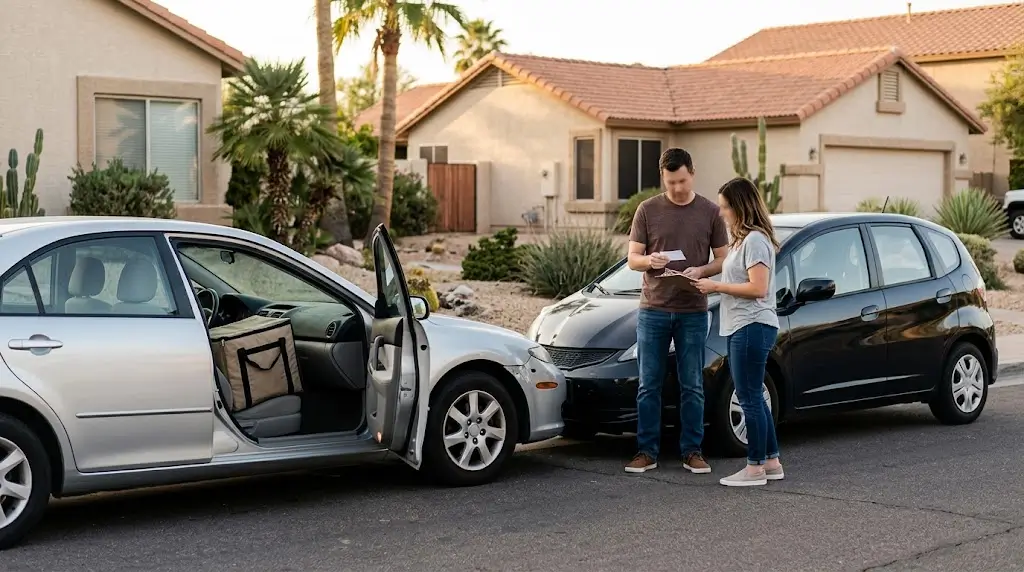
- Exchange the required identifying and insurance information with the other driver.
- Photograph the vehicles, damage, parking spaces, aisle, signs, markings, and anything that blocked a driver’s view.
- Get names and contact details for anyone who saw the collision.
- Write down what happened while the details remain fresh. Separate what you saw from what you assume.
- Notify your insurer and keep copies of emails, estimates, receipts, and claim details.
- Seek medical attention if you have pain, symptoms, or concerns after the crash.
For a fuller post-crash checklist, see Harris Injury Law’s guide on what to do after a Phoenix car accident.
What Evidence Can Help Prove Fault?
Clear evidence can help resolve conflicting accounts. When safe, photograph vehicle positions, damage, license plates, parking lines, signs, lighting, and obstructions from several angles. Check whether a dashcam or property security camera may have recorded the collision. Ask the property manager to preserve any relevant footage promptly. Businesses set their own recording and retention practices, so do not assume footage will remain available.
Collect witness details and save report information. Keep repair estimates, bills, insurance correspondence, medical records, and proof of missed work, if relevant. A police report may help document a crash, but it does not automatically settle civil fault. An officer may not witness the impact, and a report may not capture every relevant detail.
Do Police Respond to Parking Lot Accidents in Phoenix?
Police response depends on the circumstances and the agency with jurisdiction. Call 911 for an emergency or when someone may need immediate medical help. For a nonemergency, contact the appropriate law enforcement agency and ask about response and reporting procedures. The Phoenix Police Department lists its nonemergency contact information online.
Do not assume that a crash on private property never needs a report. The Arizona Department of Transportation says drivers who want insurance information for another Arizona registered vehicle must provide a law enforcement crash report. ADOT gives specific instructions for private property crashes when police did not attend. Drivers must obtain a report from the agency with jurisdiction before requesting that insurance information. Review ADOT’s Insurance Information Request instructions.
How Do Insurance Companies Handle Parking Lot Accidents?
Insurers review the available evidence and apply the terms of the relevant policy. They may consider driver statements, photographs, video, witness accounts, damage, and any report. They also assess responsibility and the losses that the policy may cover. Property damage liability coverage generally addresses damage a covered driver causes to someone else’s property. Collision coverage may help pay for damage to your own vehicle, subject to the policy and deductible. Medical payments and uninsured or underinsured motorist coverage may apply in some injury situations. Coverage depends on the policy and facts. The Arizona Department of Insurance and Financial Institutions explains common auto coverages and claim steps. Give accurate information, keep your records, and ask the insurer to explain any disputed decision in writing.
Can a Parking Lot Owner Be Responsible?
Poor lighting, blocked sightlines, damaged pavement, unclear markings, or unsafe pedestrian routes may contribute to a collision. A property owner is not automatically liable because a crash happened in the lot.A property related claim may require evidence of a dangerous condition. It may also require evidence that the responsible party failed to address the condition as required. The condition must have contributed to the harm. Photograph any concern and report it to the property manager. Responsibility depends on the facts and applicable law.
Frequently Asked Questions
What Is the Average Settlement for a Car Accident in Arizona?
There is no single average that can reliably predict a particular parking lot claim. Injury severity, medical treatment, missed income, fault, evidence, and available coverage can change the outcome. Harris Injury Law discusses these factors in its article about the average personal injury settlement in Arizona.
Is a Driver Who Backs Out Always at Fault?
No. Arizona law requires a driver to reverse only when the movement can occur with reasonable safety. The other driver’s actions and the surrounding facts may also matter. Evidence helps assess responsibility.
Can I Make an Insurance Claim if Police Did Not Attend?
The absence of an officer at the scene does not, by itself, decide whether an insurance claim can proceed. Keep the evidence you have and ask the relevant agency about reporting options. Some processes, including ADOT’s request for another vehicle’s insurance information, require a law enforcement crash report.
When Should You Speak With a Phoenix Car Accident Lawyer?
Legal guidance may help when a crash caused injuries, drivers dispute fault, video may disappear, or an insurer challenges responsibility or coverage. You may also need advice when several drivers or a possible property hazard contributed to the collision.
Harris Injury Law represents injured people in Phoenix and across Arizona. You can review the firm’s Phoenix car accident attorney page or contact Harris Injury Law to discuss your situation. Every claim depends on its facts, and no lawyer can promise a particular outcome.
This article provides general information, not legal advice. Reviewed by Jason A. Harris, Harris Injury Law.