Skip to content

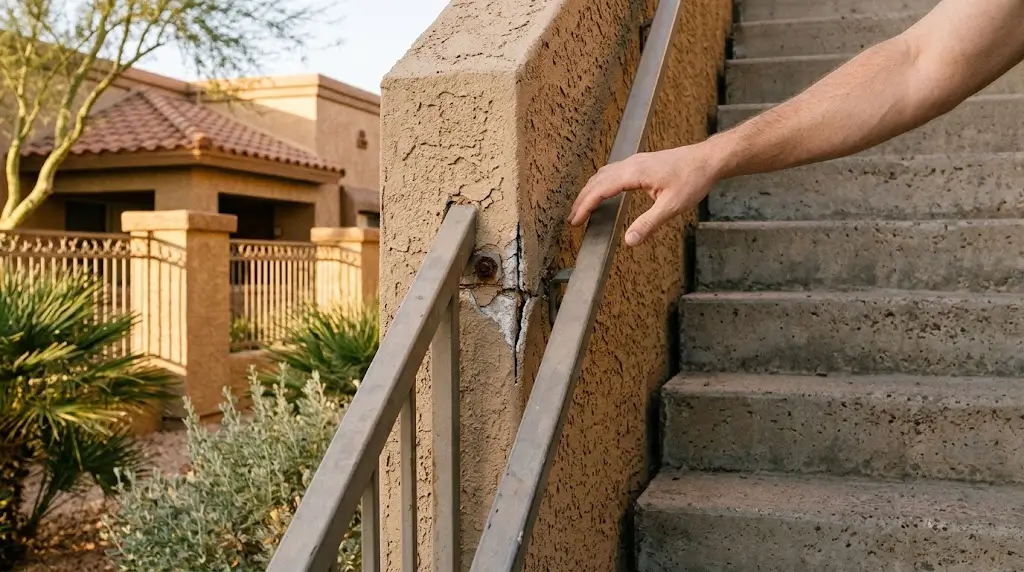
A loose stair rail might not look dangerous until someone reaches for it and it gives way. A wet walkway can cause trouble for residents heading home from work. After an apartment injury, medical bills and missed work may be only part of the problem. You may also struggle to get clear answers from the property manager.
Arizona law does not make an apartment owner responsible for every accident. The key questions are who controlled the area, what caused the injury, and whether a responsible party failed to use reasonable care.
What Does Arizona Law Require Apartment Landlords to Maintain?
Arizona law places specific maintenance duties on residential landlords. Under A.R.S. § 33-1324, landlords must keep common areas clean and safe. They must also maintain supplied facilities, including elevators, in safe working order. For apartment residents, shared spaces often include stairwells, hallways, entrances, walkways, and parking areas. A defect in one of these places may raise questions about who had responsibility for repairs.
The Arizona Supreme Court addressed common area duties in Martinez v. Woodmar IV Condominiums. The court held that a condominium association had duties similar to a landlord over common areas under its control. Those duties could extend to guests allowed to use those areas. That does not mean every injury creates a valid claim. The property’s control, the applicable duty, and the facts still matter.
Which Apartment Complex Hazards Can Cause Injuries?
Apartment buildings have shared spaces that require regular attention. Problems can arise in several ways:
- Stairs and walkways: Broken steps, loose handrails, cracked pavement, and uneven concrete can create fall hazards.
- Water and drainage: Irrigation leaks, standing water, and slippery laundry room floors can put residents and visitors at risk.
- Pools and amenities: A damaged gate or slippery pool deck may raise safety concerns. The City of Phoenix pool barrier guidance explains requirements for relevant properties.
- Building features: Defective elevators, broken locks, exposed wiring, and damaged balcony railings may create other hazards.
- Lighting and security: Dark parking areas and malfunctioning entrance gates can raise questions about maintenance or security.
Phoenix’s monsoon season can bring heavy rain and runoff. Irrigation systems can also leave water across a walkway during dry weather. Neither circumstance proves negligence by itself. What matters is the condition, how long it existed, and what the responsible party did about it.
What Must You Prove in an Arizona Apartment Injury Claim?
A premises liability claim generally involves four elements: duty, breach, causation, and damages. The Arizona Supreme Court discussed these principles in its March 12, 2025, decision in Perez v. Circle K Convenience Stores, Inc..
Here is how the elements work:
- Duty: The responsible party owed a legal duty under the circumstances.
- Breach: That party failed to meet the applicable standard of care.
- Causation: The failure contributed to the injury.
- Damages: The injured person suffered legally recognized losses.
Perez involved a customer who tripped over a store display. Its analysis helps explain negligence, but the case does not settle every question involving residential landlords.
Did Management Know About the Hazard?
Evidence of prior notice can make a difference. Actual notice means a responsible person knew about the dangerous condition. A tenant’s earlier complaint about a leaking irrigation line may help establish that knowledge.
Constructive notice concerns conditions that a responsible party should have discovered through reasonable care. The condition’s duration, repeated complaints, and inspection history may all matter.
Imagine a puddle that appears just before someone falls. Compare that with a walkway that becomes slippery every time an irrigation system runs. The evidence in those situations may look very different. And here’s the thing: a photograph can show what the hazard looked like, but it may not explain how long it had existed. Keep maintenance requests, emails, texts, incident reports, and any replies from management.
Does an Obvious Hazard End the Claim?
Not automatically. In Perez, the court explained that an open and obvious condition did not determine whether a business owed its customer a duty of care. The condition could still matter when the court considers whether the business breached that duty. The decision involved a store, not a residential apartment complex. Its reasoning must be applied carefully to the relationship and facts in a housing case.
Who May Be Responsible for an Apartment Complex Injury?
The property owner may not be the only party whose conduct matters. Depending on the circumstances, responsibility may involve a landlord, property manager, maintenance contractor, landscaper, pool service, or security company. Consider a walkway damaged during repair work. The contractor’s actions may matter, but so may management’s knowledge of the defect and response to complaints. A contract with a maintenance company does not settle every question about responsibility.
Can Inadequate Security Lead to a Claim?
Sometimes, the issue is not a fall or a broken fixture. It may involve an assault in a shared parking area or another common space.
In Martinez, a guest was shot while fleeing a group in a condominium parking lot. The record included evidence that the association knew about criminal activity in common areas and had received security warnings. The Arizona Supreme Court found enough evidence for a jury to consider negligence and causation.
That ruling does not make an owner responsible for every crime on apartment property. Prior incidents, foreseeable risks, control of the area, and reasonable security measures may affect the analysis.
What Should You Do After an Apartment Complex Injury?
Start with your health. Then preserve information that may help explain what happened.
- Get medical care. Seek prompt treatment and follow your provider’s advice.
- Report the incident in writing. Include the date, time, location, and a factual description. Keep a copy.
- Photograph the scene. If safe, capture the hazard, lighting, warning signs, and surrounding area.
- Record witness details. Save names and contact information for people who saw the incident or know about earlier problems.
- Keep relevant messages. Save maintenance requests, repair complaints, emails, and texts from management.
- Ask that records be preserved. Security footage, inspection logs, and work orders may help establish what happened.
Do not guess about the cause or add details you cannot confirm. Describe what you observed and keep your records in one place. An incident report can document your account, but it does not decide who was legally responsible. The same applies to a photograph or witness statement. Each item supplies part of the picture.
What Compensation May Be Available?
Depending on the facts and applicable law, an injured person may seek compensation for medical expenses, future treatment, lost wages, reduced earning capacity, and pain and suffering. Keep medical bills, treatment records, wage documents, and receipts. These records help show how the injury affected your health and finances. Our guide explains what a Phoenix personal injury attorney can recover.
No particular amount is guaranteed. The evidence, the injury, and the applicable law determine which damages may be available. You can also learn more about the firm’s work through the Arizona injury lawyers page.
What Deadlines and Fault Rules Could Affect Your Claim?
Arizona generally gives injured people two years to file a personal injury lawsuit under A.R.S. § 12-542. Exceptions and special rules can change the deadline, so do not assume the general period covers every situation. Arizona also follows a comparative fault. Under A.R.S. § 12-2505, a claimant’s damages generally decrease in proportion to the claimant’s share of fault. Partial responsibility does not automatically bar recovery.
Frequently Asked Questions
Can I sue an apartment complex if I am injured in a common area?
You may have a claim if a responsible party owed you a duty, failed to meet it, and caused a compensable injury. Control of the area and the evidence matter.
What if the apartment manager says they did not know about the hazard?
Earlier complaints, inspection records, work orders, and recurring problems may help show what management knew or should have discovered. The facts determine whether that evidence supports a claim.
Can a guest or visitor bring an apartment injury claim in Arizona?
Potentially. A person does not always need to live at the complex to have a claim. The visitor’s circumstances, the area involved, and the applicable duty matter.
What if a maintenance company caused the dangerous condition?
The contractor’s work may be relevant. Investigators may also need to examine who controlled the area, who knew about the condition, and how each party responded.
Can I recover compensation if I was partly at fault?
Possibly. Arizona’s comparative fault law generally reduces damages according to the claimant’s share of fault. The facts determine how the rule applies.
Can an apartment complex be liable for an assault caused by inadequate security?
A claim may depend on foreseeable risks, prior incidents, control of common areas, and reasonable security measures. A crime on the property does not establish liability on its own.
How long do I have to file an apartment injury lawsuit in Arizona?
The general personal injury deadline is two years under A.R.S. § 12-542. Exceptions may apply, so check the deadline for your specific circumstances.
Discuss Your Phoenix Apartment Injury
A maintenance complaint, a damaged handrail, or missing security footage may raise questions worth examining. If you were injured at a Phoenix apartment complex, contact Harris Injury Law to discuss what happened and which records may matter. A review of the facts can help you understand your options. No attorney can promise a particular outcome.
Reviewed by Jason A. Harris, Attorney, Harris Injury Law, PLLC.